
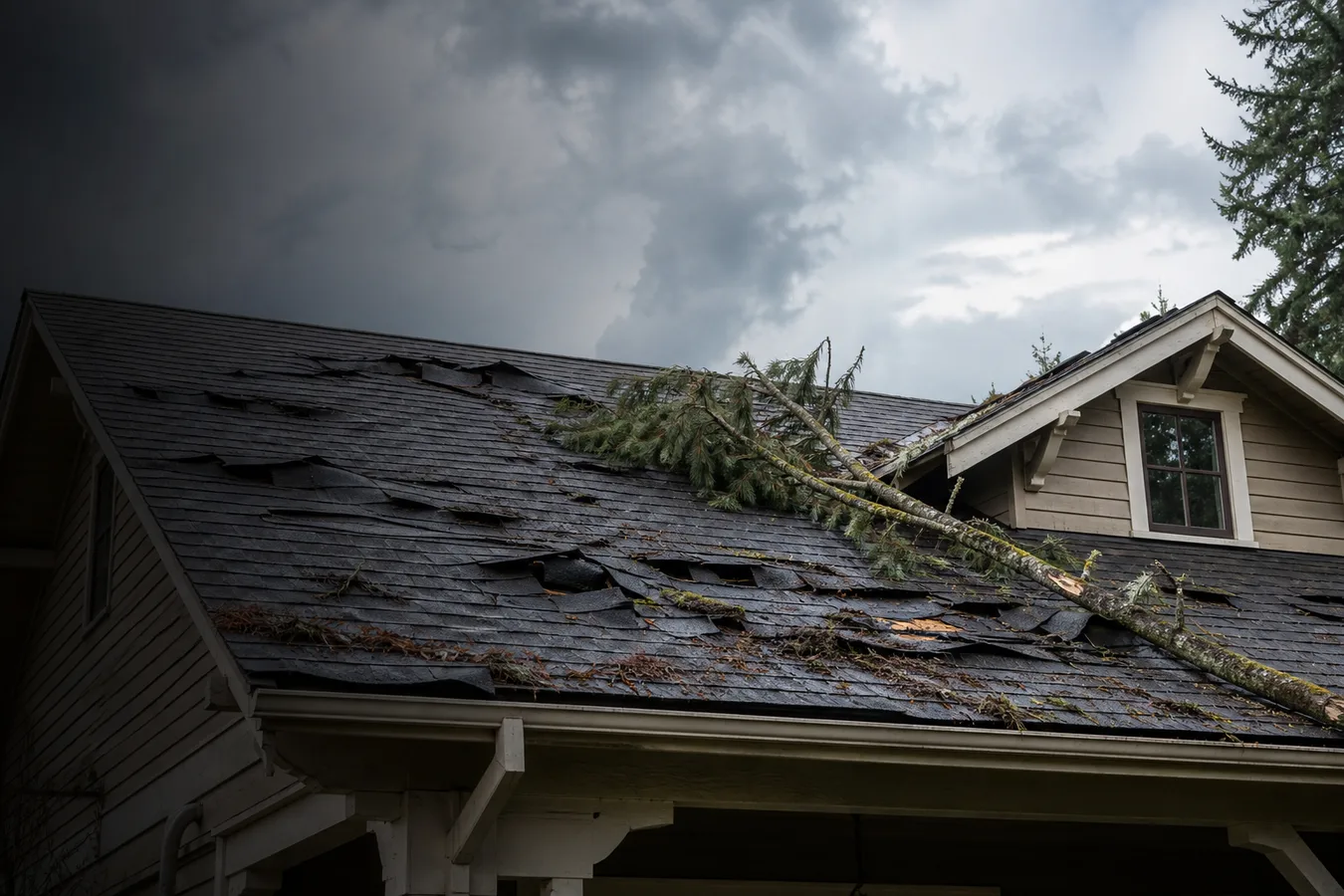
Storm Damage Roof Repair: What Oregon Homeowners Should Do
Storm damage roof repair for Oregon homes. Learn the first steps, insurance claim tips, and when to call (503) 317-8312 for fast help.
Read the articleRoofing guidance · Storm damage
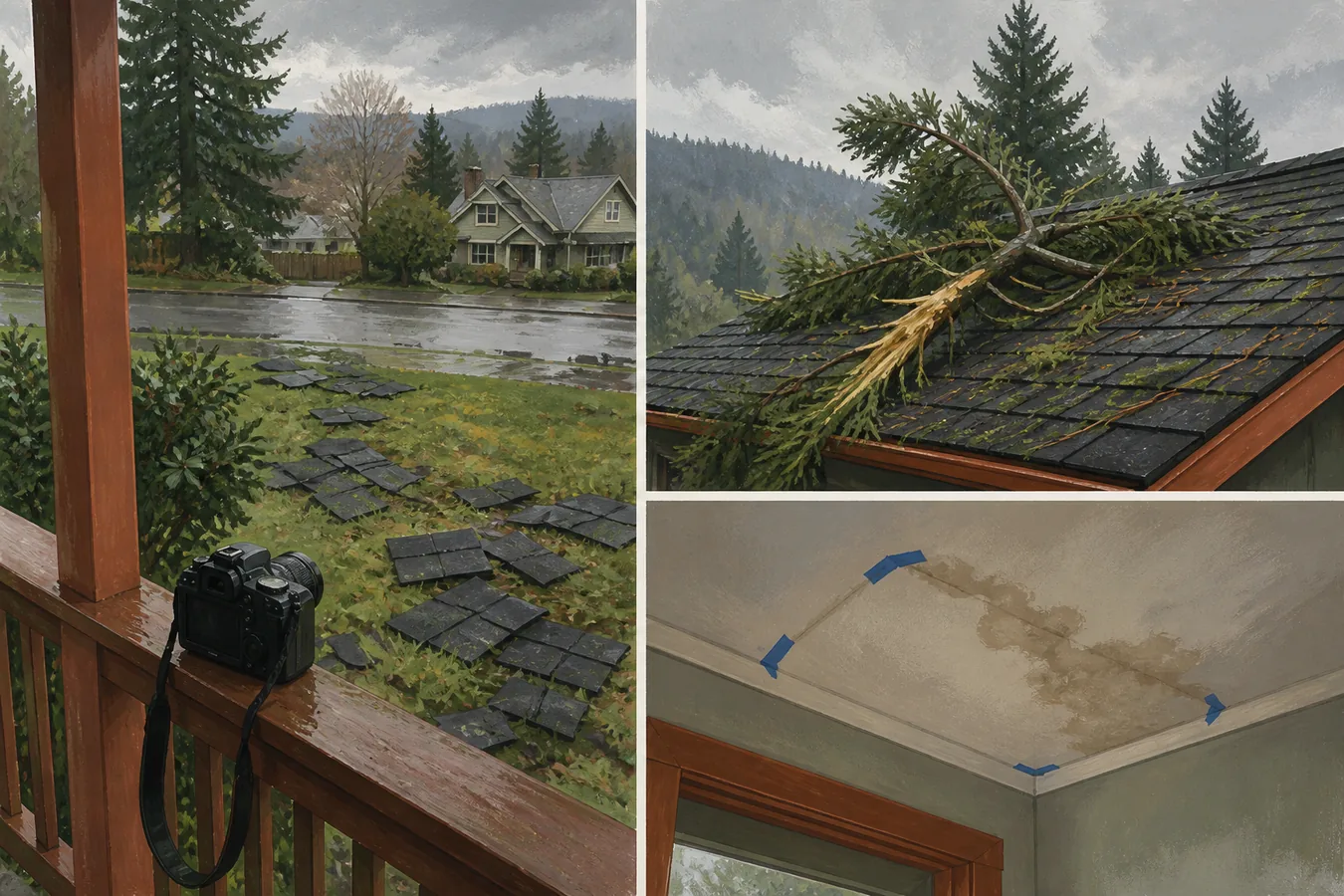
The Oregon Division of Financial Regulation tells homeowners to do a cost-benefit check before they file. If the roof work is close to your deductible, a claim can cost more later in premium than it pays today. When the damage is clearly from wind, hail, or a falling limb, the claim still needs evidence that the event was sudden, not a roof that had been shedding granules for years.
DFR's storm guidance is specific on wind. If a storm blows shingles off one slope, the insurer typically pays to repair that damage, not to reroof the house. A tree that hits the dwelling is often a homeowners claim even if the tree stood in a neighbor's yard. A tree that falls in the yard and misses the house is usually debris you pay to remove.
Wear, moss, and "it was old" are the exclusions that kill claims. The adjuster is looking for a date, a weather event, and a leak path that starts at storm-damaged material. Your job is to make that path visible without destroying it.
Flood and groundwater are different policies. A roof leak from wind-driven rain is not automatic flood coverage, and a drain backup is often excluded unless you bought an endorsement. Ask the agent which form you actually have before you describe the loss on the recorded line.
DFR's own list after property damage is short: contact the insurer, stop further damage, save receipts, delay permanent repairs until inspection, inventory what broke, and photograph it. For a roof, that list needs more grain.
From the ground, photograph:
From a safe attic, if the floor is sound:
Do not get on a wet roof. Do not pull loose shingles "to show the adjuster." Do not let a storm-chaser start a tear-off before the loss is recorded. Temporary protection is allowed. Permanent work that erases the cause is how a sudden-loss claim turns into a maintenance argument.
Keep a paper trail: claim number, adjuster name, every photo filename, and receipts for tarps, fans, or a hotel if the house is unlivable. DFR's consumer line is 888-877-4894 if the claim stalls.
A $1,500 deductible on a $900 shingle repair is a claim you should probably skip. A $1,500 deductible on a slope that lost covering and wet the deck is a different conversation. Percentage deductibles are easy to miss: DFR's example is 0.5 percent of Coverage A. On a $300,000 dwelling limit, that is $1,500 before the insurer pays a dollar.
File when:
Skip or pause when the only issue is a handful of granules in a gutter after a normal Oregon winter and no covering is missing.
A contractor cannot approve coverage. What they can do is trace the leak, photograph the failed parts, and write a scope the adjuster can read. That inspection belongs in storm damage roof repair. The first-night steps, before anyone talks about insurance language, are in storm damage roof repair for Oregon homeowners.
Homes in Springfield sit in the same wind-driven rain pattern as Eugene. Call Roof Repairs Pro at (503) 317-8312 with the date of the storm and what you can see from the ground. We will tell you whether the next step is mitigation, documentation, or both.
Common questions
Call the roofer first when water is entering or the roof is unsafe. Then report the loss. The claim needs the leak path, not only a date.
Often no. DFR says insurers pay for the damaged area. One stripped slope is not an automatic full reroof.
Protect the opening. Do not finish a replacement that removes the evidence. Save every mitigation receipt.
Policies require prompt notice. Many Oregon homeowners forms also set a deadline, commonly a year from the loss. Report as soon as you find the damage.
Ask what would distinguish storm damage on this roof. Additional photos of the leak path, a dated weather record, and a second inspection of the same slope are the usual next facts, not a louder argument.
Keep reading
Storm damage roof repair for Oregon homes. Learn the first steps, insurance claim tips, and when to call (503) 317-8312 for fast help.
Read the article
Portland roof leak repair often runs $350 to $1,500 when the source is localized. See what changes the bid, then call (503) 317-8312.
Read the article
Oregon roofers need an active CCB license, bond, and insurance. Verify the number, get a written scope, then call (503) 317-8312.
Read the articleAfter reading
Guidance helps you recognize a problem. A phone call is the next step when water is entering, materials are missing, or a sale or storm created a deadline.
Contain the drip if it is safe and call with the address.
Wind and impact openings should be reviewed before the next rain.
Moisture is still moving through the roof assembly.
Inspection or certification scheduling is confirmed when you call.
Related pages
Use the matching service page, the local area page, or the related article, then call Roof Repairs Pro.
Describe the property location, visible symptoms, and whether water is entering now.