
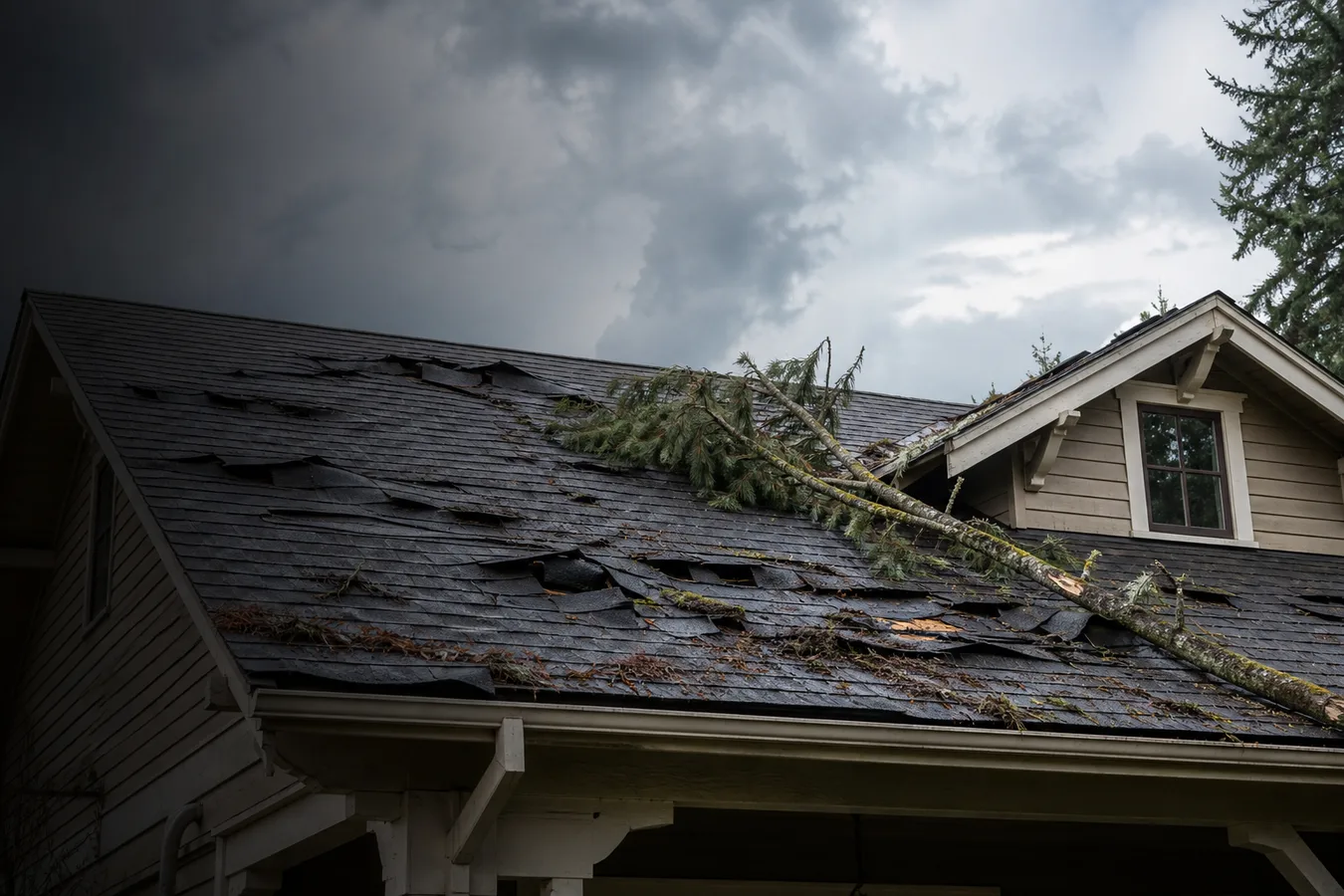
Shingles are in the yard after wind
Missing pieces leave nail lines and underlayment exposed to the next rain.
Portland, Oregon
Wind and falling debris can loosen roofing materials, damage flashing, block drainage, and create openings that are hard to see from the ground. Call after the storm has passed and it is safe to assess the property.
Warning signs
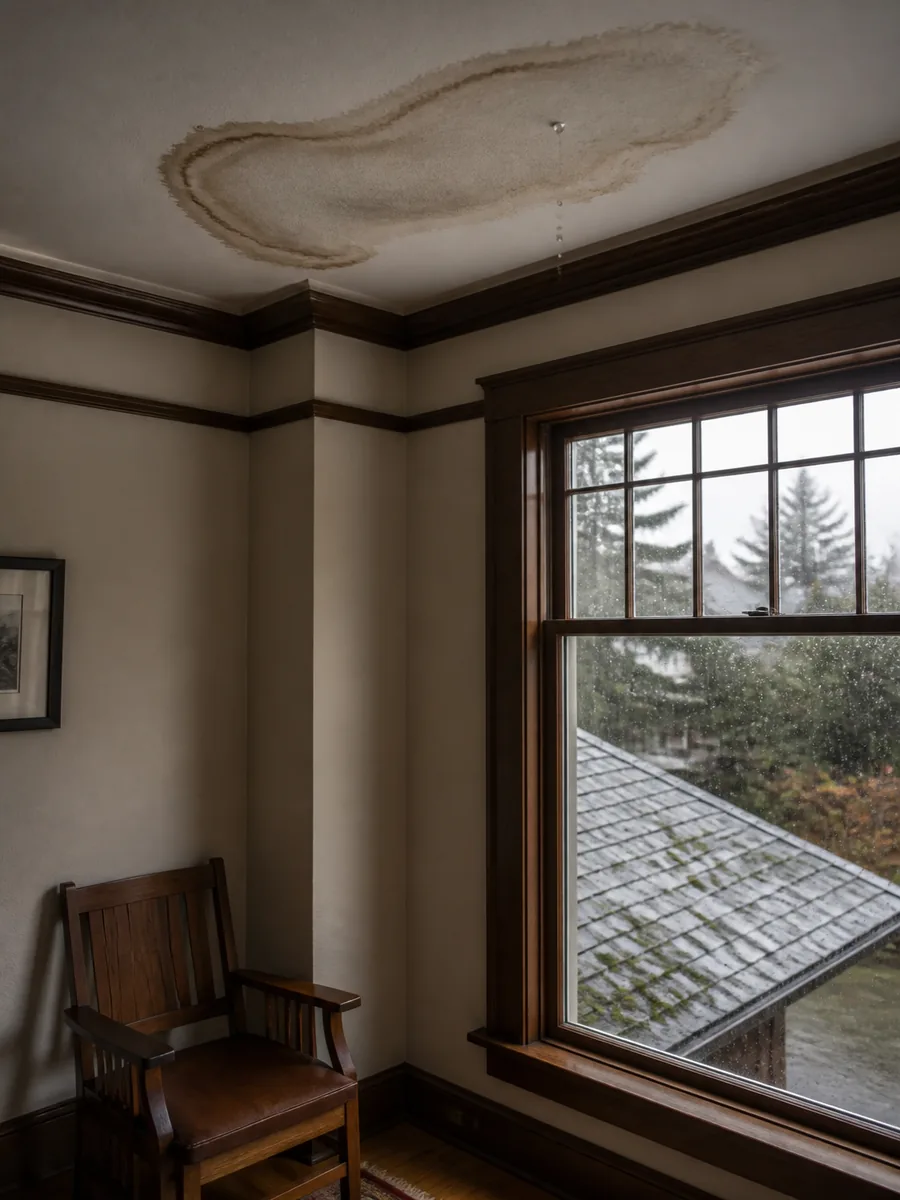
Look from the ground for missing or lifted materials, displaced ridge pieces, bent metal, branches on the roof, damaged gutters, debris at valleys, and new water stains indoors. A roof can be damaged even when there is no immediate leak.
What to know
The assessment should document visible conditions, distinguish storm impact from existing wear when possible, and identify temporary and permanent work. Keep photographs, written scopes, invoices, and contractor information for property records or an insurance discussion.
What to know
A roofing contractor can document conditions and propose repairs, but coverage is determined by the policy and insurer. Avoid promises that a claim will be approved or that all costs will be covered.
When to call
Storm damage roof repair starts with what the weather actually changed: lifted materials, impact marks, debris, and water that followed a new path. Call after wind, hail, or falling limbs, even if the leak has not reached a ceiling yet.
Missing pieces leave nail lines and underlayment exposed to the next rain.
Impact can crack covering and loosen nearby flashing.
Wind can work seams and fasteners on exposed ridges and eaves.
Edge damage often shows up as overflow and fascia staining afterward.
The entry point may be upslope from the stain.
Surface wear after hail or wind can shorten remaining service life.
Inspection focus
A useful storm damage roof repair visit should look past the first stain and document the parts of the roof that move water in Oregon weather.
Scope factors
Storm damage roof repair should separate cosmetic marks from openings that move water. A written scope should list observed defects and any areas that still need drying or deck review.
One slope is a different conversation from damage on several planes.
Brittle materials may not accept a durable isolated repair.
Photos and a clear defect list help, but coverage decisions are not made on this website.
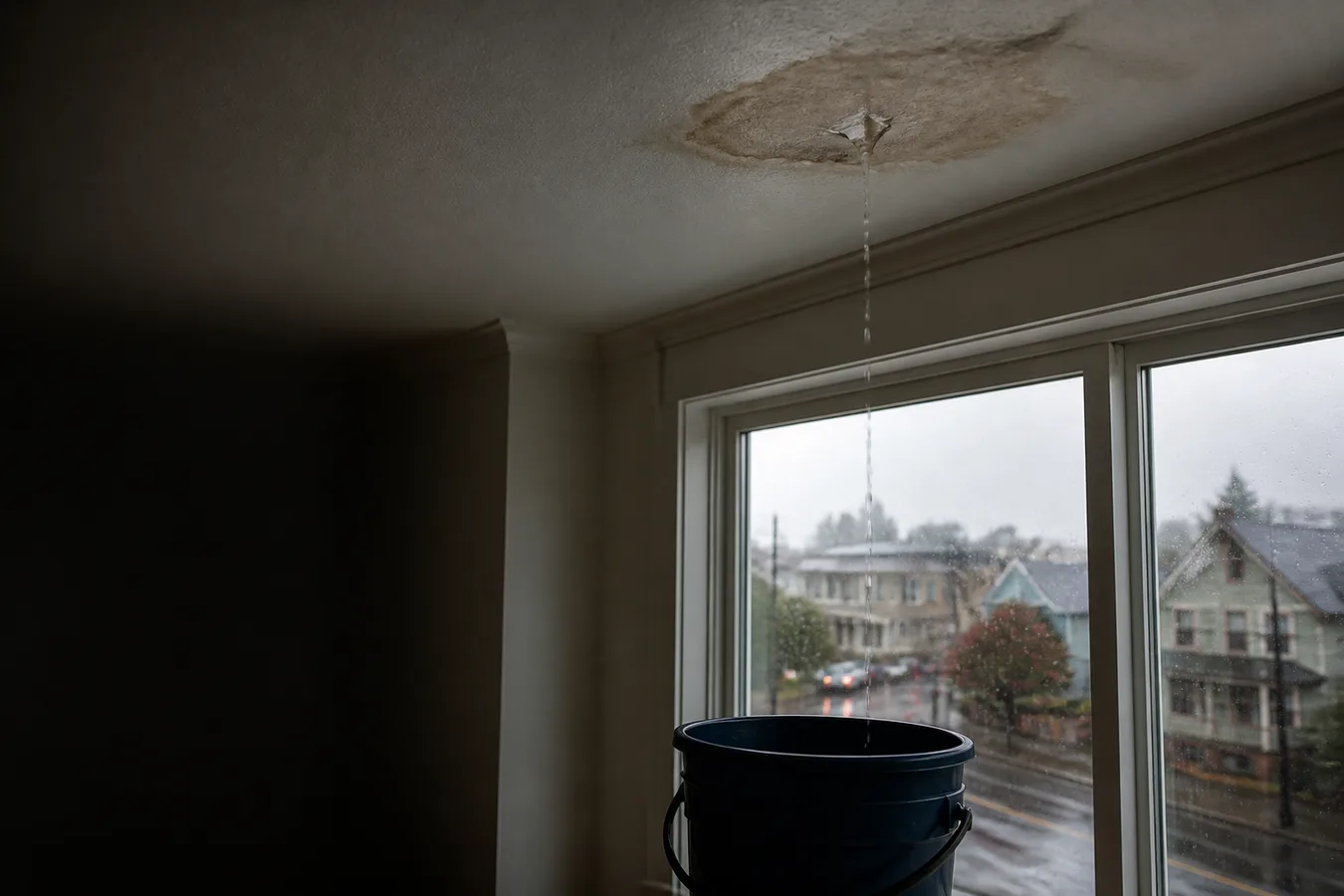
Additional rain can expand a small opening before repairs are finished.
Continue the conversation
These nearby roofing services often belong in the same call. Review the matching page, then call to schedule service.
 01
01Fast help when water is entering or a roof opening appears after weather.
Review this service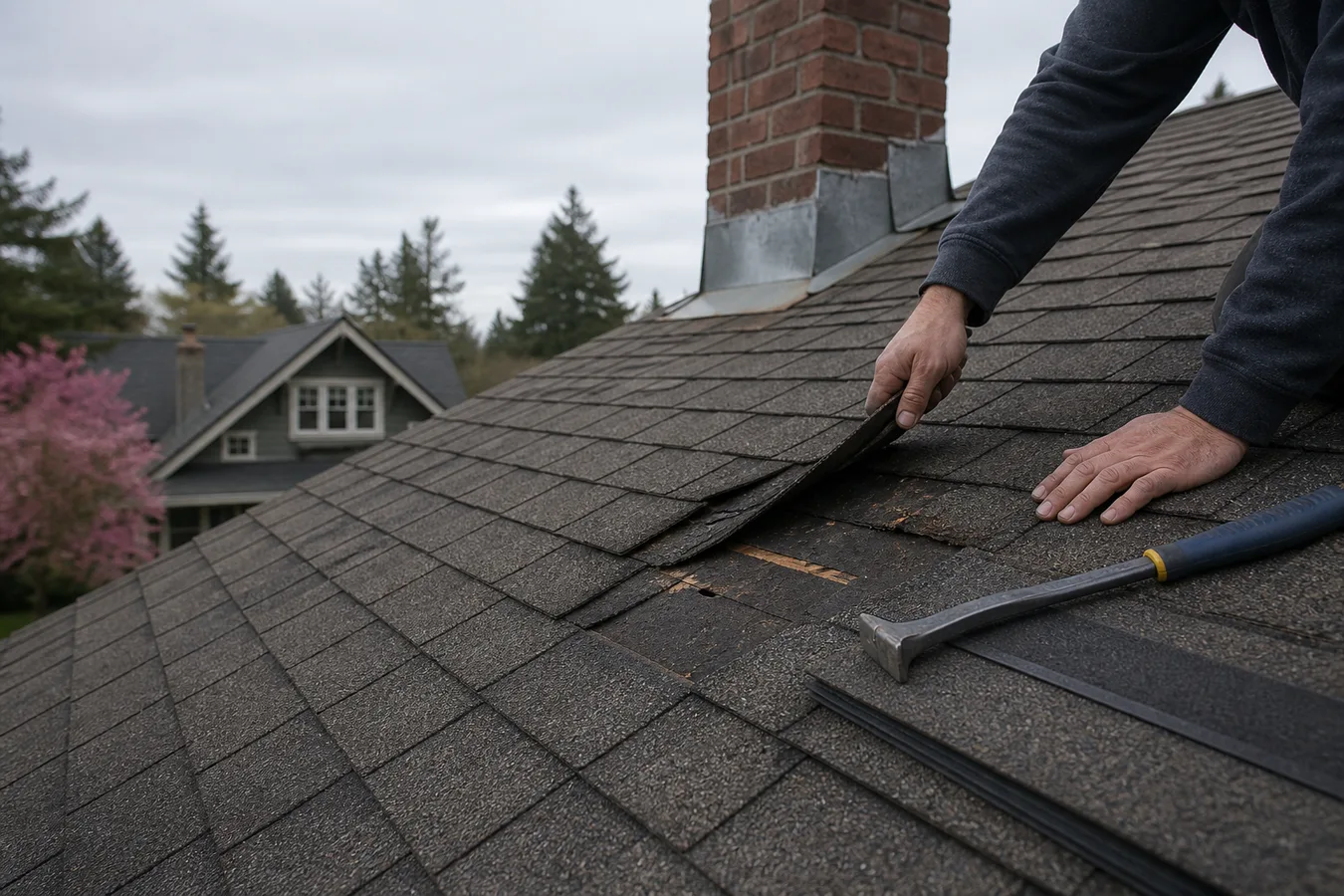 02
02Localized leak, flashing, shingle, and roof-edge repair support for Oregon properties.
Review this service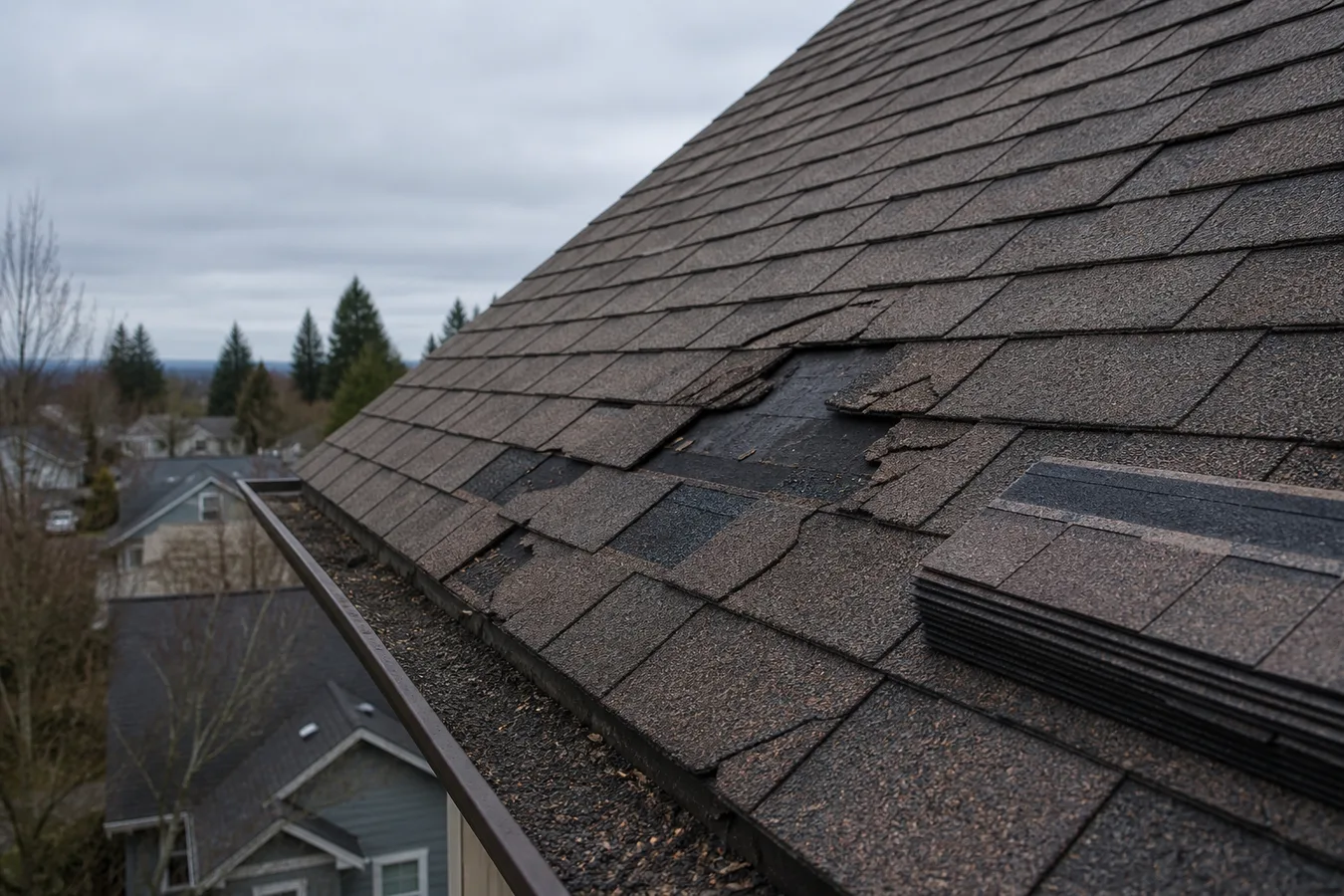 03
03Lifted, cracked, missing, or worn asphalt shingles and related flashing details.
Review this service 04
04Documented review of materials, flashing, drainage, edges, and moisture signs.
Review this serviceCommon questions
Yes. Small openings can expose underlayment and surrounding materials to further wind and rain.
That depends on safety, urgency, policy requirements, and authorization. Discuss emergency protection and documentation first.
Yes. Call to schedule a roof inspection.
Call with the property location, visible symptoms, and whether water is actively entering.