
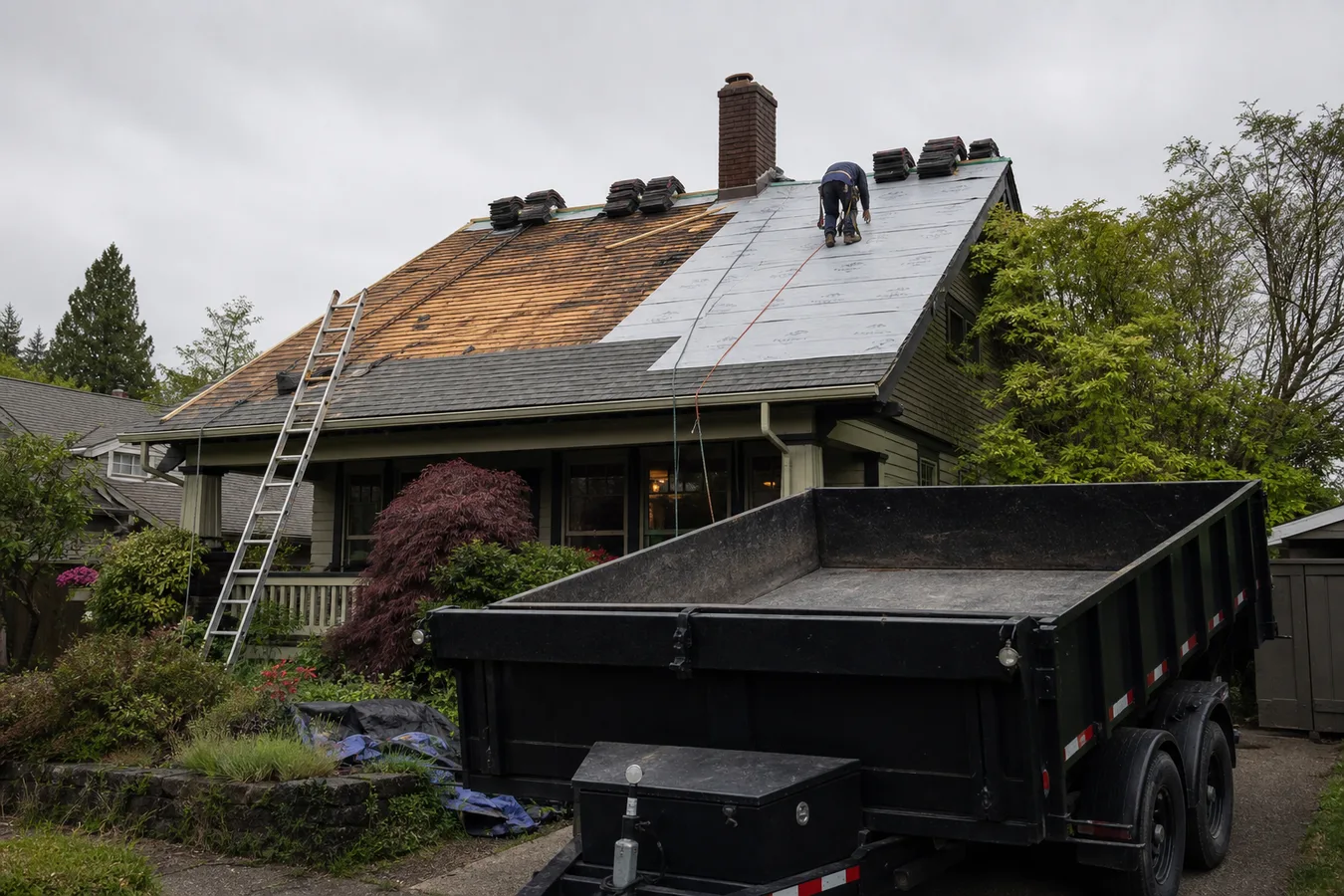
Choosing Roof Replacement Services in Oregon
Replacing a roof in Oregon? Compare costs, timelines, materials, and contractor questions before you commit. Call (503) 317-8312.
Read the articleRoofing guidance · Hiring
Oregon does not license "roofers" as a separate trade the way it licenses plumbers and electricians. Anyone who advertises, bids, or repairs a roof for pay still needs an active Construction Contractors Board license. That distinction matters. A CCB number means the business passed a law-and-business exam, posted a bond, and carries liability insurance. It does not, by itself, prove the crew can trace a leak in a Willamette Valley valley.
Ask for the license number first. Contractors must print it on advertising, including websites and cards. Name search is a backup only, because punctuation in a business name dumps valid licenses.
Search the number on the CCB license search. On the license summary, confirm all of this on the same day you sign:
The CCB is clear that Oregon does not require most contractors to complete trade skill training. Once the license checks out, the rest of the hiring work is about the roof, the written scope, and references from the same weather.
Oregon requires a written contract when the project costs more than $2,000. The CCB still recommends writing even smaller repairs. For roofing, the document should do more than name a total.
A contract that protects you names:
Check the license again on the morning work starts. A number that was active at bid time can lapse.
Price shopping without a scope is how two bids look $4,000 apart for different jobs. Watch for these patterns instead:
If you hire unlicensed help, you lose CCB mediation and bond access. You can also be treated as the employer of those workers, including tax and injury exposure.
For a full replacement, keep choosing roof replacement services in Oregon next to the contract so material and ventilation questions stay in the same conversation. The roof replacement page is the commercial scope those questions should match.
West-side addresses in Tualatin sit in the same wet pattern as Portland. Call Roof Repairs Pro at (503) 317-8312 with the CCB questions you already asked someone else. We will tell you which ones still do not have answers.
Common questions
No separate roofing license exists. They need an active CCB license with the right residential or commercial endorsement, plus bond and insurance.
Use the CCB search at search.ccb.state.or.us with the license number. Call the CCB at (503) 378-4621 if the record is unclear.
Do not hire it. You cannot use the CCB complaint and bond process, and permit offices will not treat that work as licensed contracting.
Yes. The CCB record shows that a policy was presented at licensing. Ask for a current certificate and confirm workers' compensation if anyone other than the owner will be on the roof.
Get it in writing. The fight later is about what was included, not about whether someone stood in the driveway.
Keep reading
Replacing a roof in Oregon? Compare costs, timelines, materials, and contractor questions before you commit. Call (503) 317-8312.
Read the article
Portland roof leak repair often runs $350 to $1,500 when the source is localized. See what changes the bid, then call (503) 317-8312.
Read the article
Oregon emergency roof leak repair typically runs $500 to $2,500. See what after-hours work includes, then call (503) 317-8312.
Read the articleAfter reading
Guidance helps you recognize a problem. A phone call is the next step when water is entering, materials are missing, or a sale or storm created a deadline.
Contain the drip if it is safe and call with the address.
Wind and impact openings should be reviewed before the next rain.
Moisture is still moving through the roof assembly.
Inspection or certification scheduling is confirmed when you call.
Related pages
Use the matching service page, the local area page, or the related article, then call Roof Repairs Pro.
Describe the property location, visible symptoms, and whether water is entering now.