
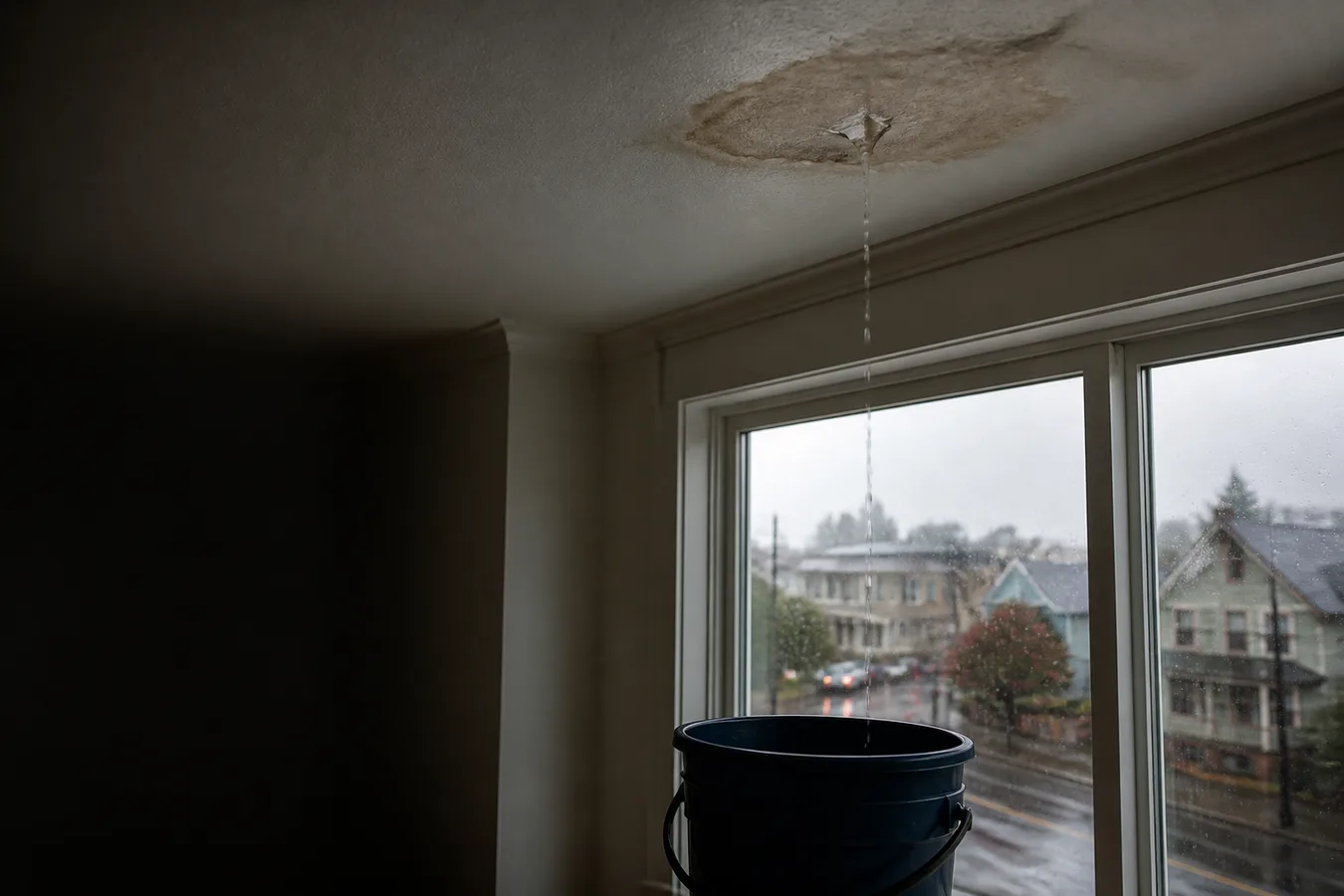
Emergency Roof Leak Repair in Oregon: What to Do First
Water coming through the roof in Oregon? Take these first steps, then call (503) 317-8312 for emergency roof leak repair help.
Read the articleRoofing guidance · Storm damage
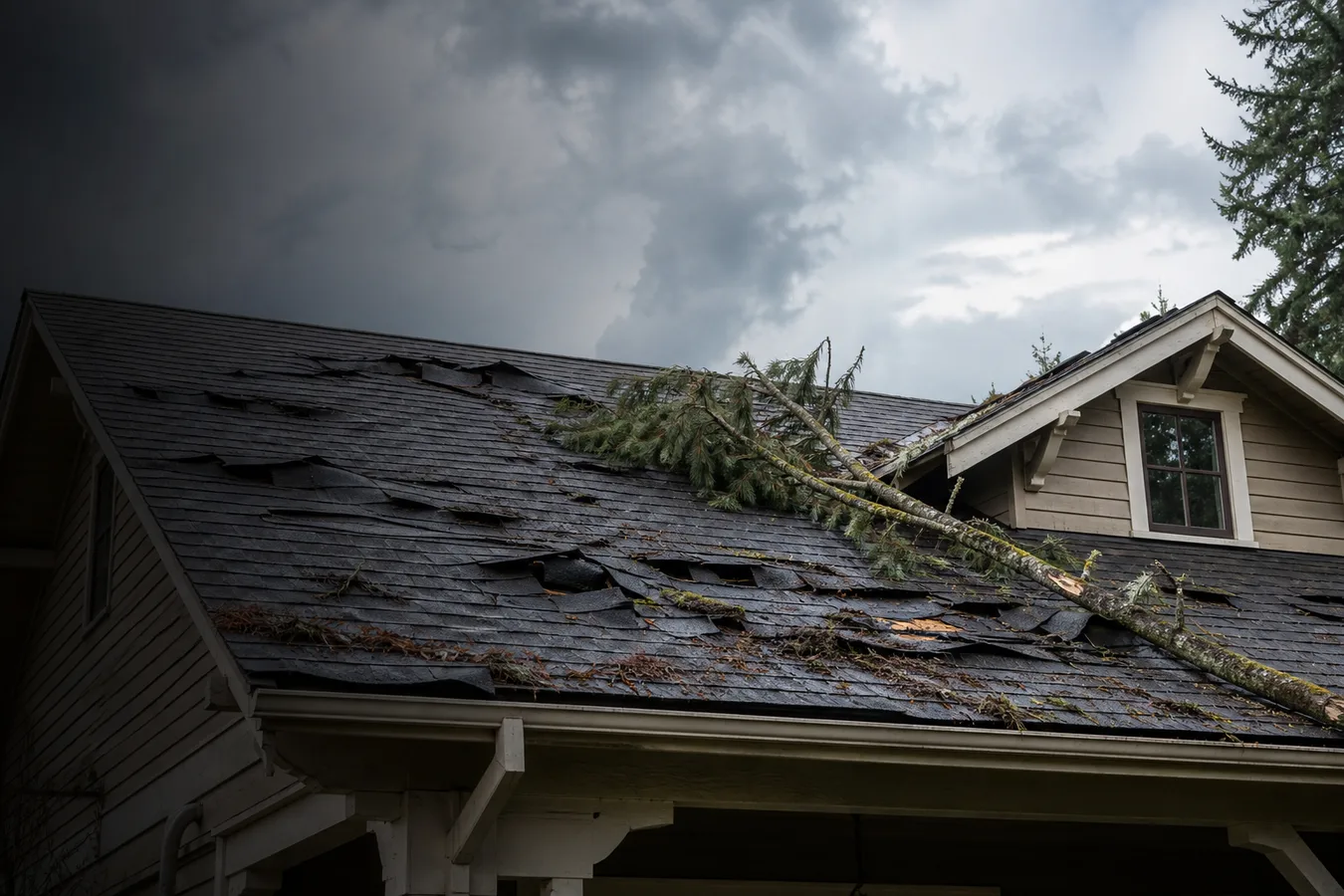
Oregon windstorms lift shingles, drive rain under flashing, and drop branches onto roofs from the coast to Bend. The damage does not stop when the storm ends. Every hour that water sits on exposed decking moves the repair from a covering problem to a structure problem. This guide covers the first steps after storm damage, the repair options, and how insurance documentation should be handled.
Safety comes first. Do not climb onto a wet roof, and do not walk under sagging ceilings. If water is entering near electrical fixtures or a ceiling is bulging, clear the room and treat it as an emergency.
Do not tarp the roof yourself on a wet, steep, or damaged surface. Do not remove shingles that look loose. Do not wait for a full insurance inspection before reporting an active leak. The leak path should be documented early, because it explains the damage to both the contractor and the adjuster.
Wind and rain in Eugene and other western Oregon cities produce the same pattern of lifted shingles, overloaded valleys, and flashing leaks.
A storm that removes a handful of shingles and damages one flashing area is usually a repair. A storm that lifts most of a slope, punctures the decking in several places, or affects a roof already at the end of its life deserves a replacement conversation. The condition of the rest of the roof, not the size of the newest hole, sets the practical scope.
Oregon homeowners insurance typically covers sudden storm damage, including wind-lifted shingles, branch impact, and resulting leaks. Damage from wear, aging, or poor maintenance is usually excluded. A contractor cannot approve or deny the claim, but documentation helps. What to photograph and when not to file is in Oregon storm damage roof insurance claims.
The adjuster's estimate is based on what is visible. A documented inspection that traces the leak path and photographs the affected slopes gives the claim the detail it needs. That is why the inspection should happen early, before repairs begin, so the damage is recorded in the condition it was found.
A storm damage roof repair starts with the leak path, then covers the materials that actually failed. If water is already indoors, use the emergency roof leak first steps before the repair visit. The scope typically includes removed and replaced shingles or panels, repaired or replaced flashing, valley and ridge work, and a review of the gutters and roof edge. The follow-up from Roof Repairs Pro should explain what was damaged, what was replaced, and any area that could not be assessed during the first visit.
Common questions
Sudden storm damage such as wind-lifted shingles and branch impact is typically covered by Oregon homeowners policies. Wear, aging, and maintenance-related damage are usually not, and the adjuster makes that call.
Call the roofer first when water is entering or the roof is unsafe, then report the damage and the documented findings to the insurer. The claim needs the leak path and photos.
Only if the roof is dry, the slope is safe, and you know the decking under the tarp is sound. A wet or steep roof is not a DIY surface, and an improperly fastened tarp can cause more damage in the next wind.
Localized storm repairs in Oregon typically run $500 to $2,500 depending on the affected area and access. Widespread slope damage moves the conversation to replacement.
Most Oregon policies require prompt notice, and many set a one-year deadline after the loss. Report the damage as soon as it is discovered to protect the claim.
Keep reading
Water coming through the roof in Oregon? Take these first steps, then call (503) 317-8312 for emergency roof leak repair help.
Read the article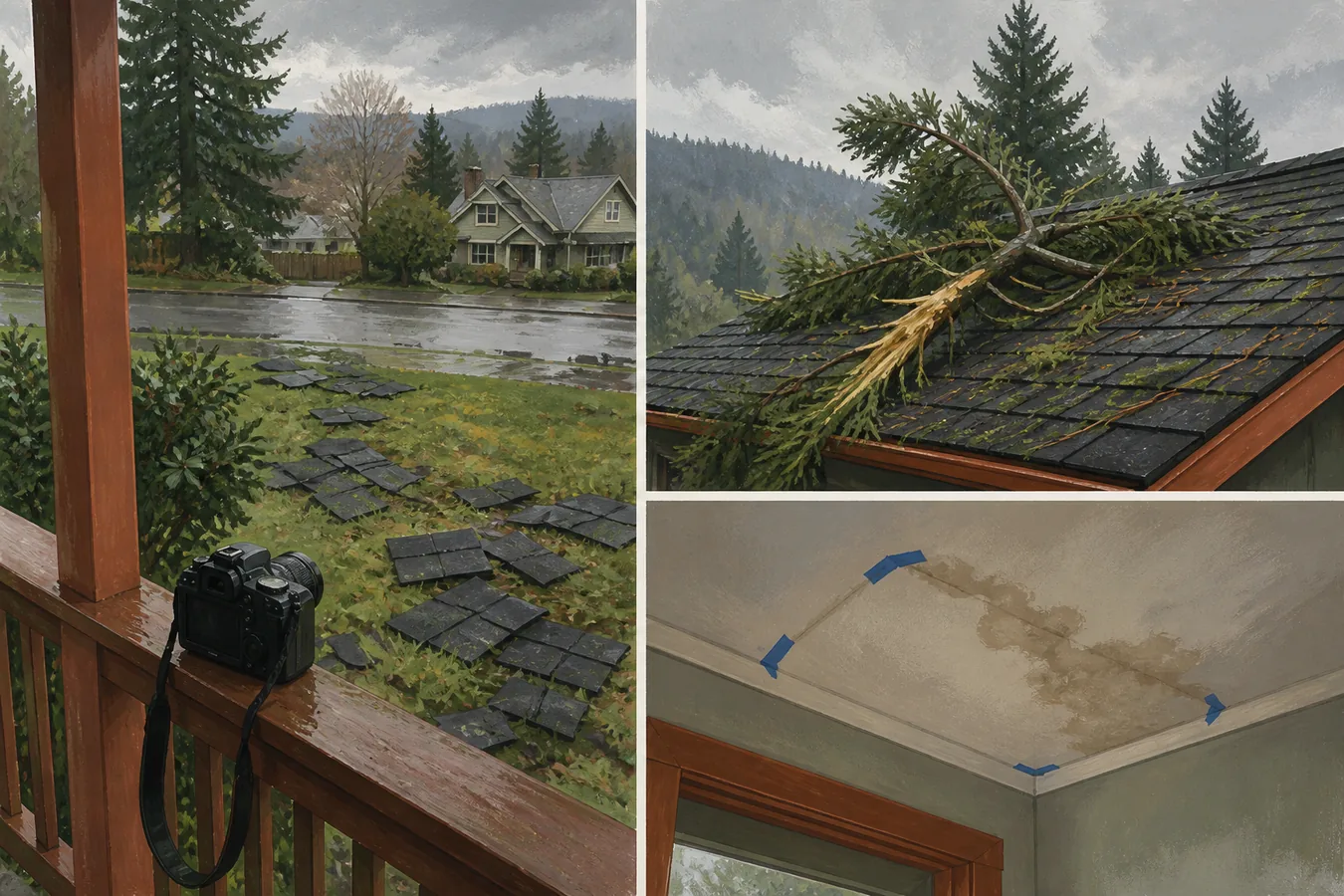
Oregon DFR says weigh your deductible before you file. Document the storm roof damage, then call (503) 317-8312.
Read the article
Portland roof leak repair often runs $350 to $1,500 when the source is localized. See what changes the bid, then call (503) 317-8312.
Read the articleAfter reading
Guidance helps you recognize a problem. A phone call is the next step when water is entering, materials are missing, or a sale or storm created a deadline.
Contain the drip if it is safe and call with the address.
Wind and impact openings should be reviewed before the next rain.
Moisture is still moving through the roof assembly.
Inspection or certification scheduling is confirmed when you call.
Related pages
Use the matching service page, the local area page, or the related article, then call Roof Repairs Pro.
Describe the property location, visible symptoms, and whether water is entering now.