
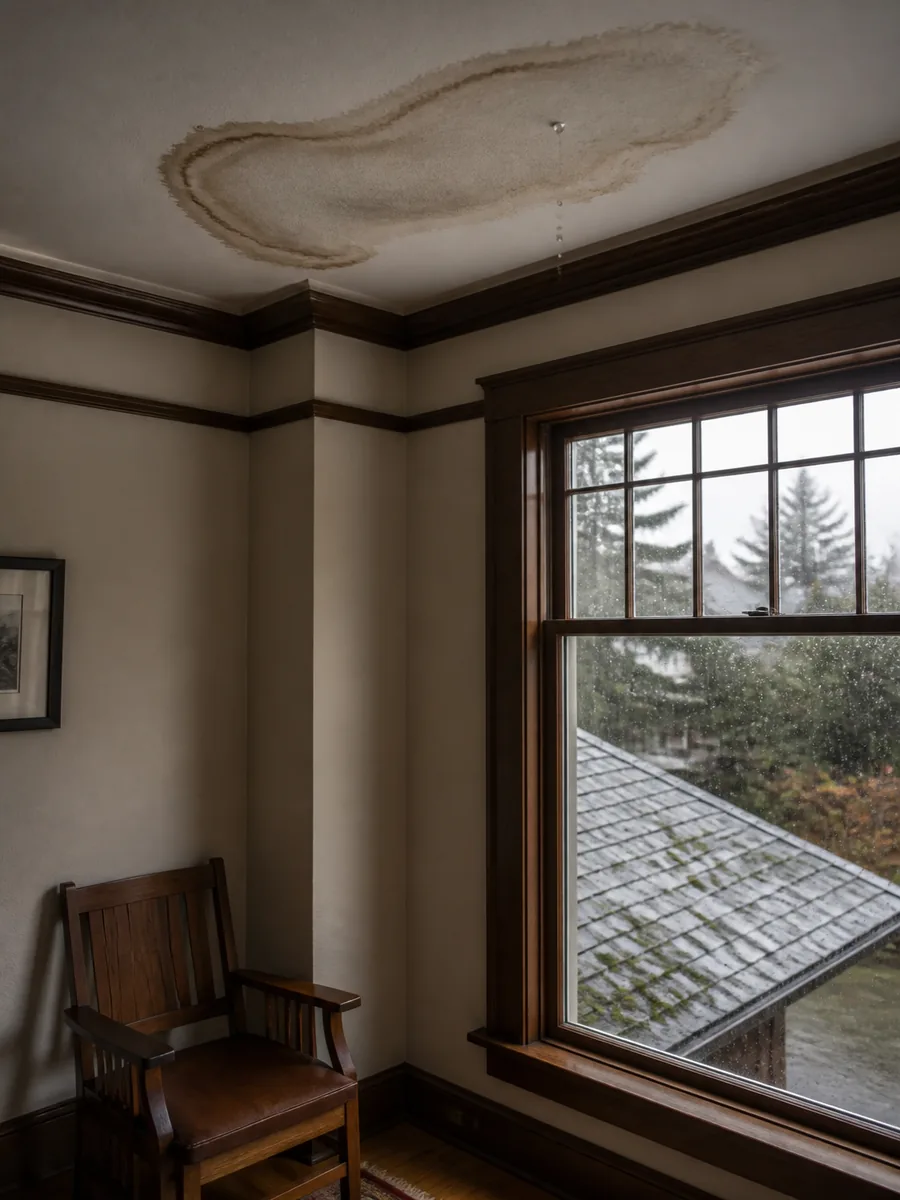
A leak shows under an inside roof corner
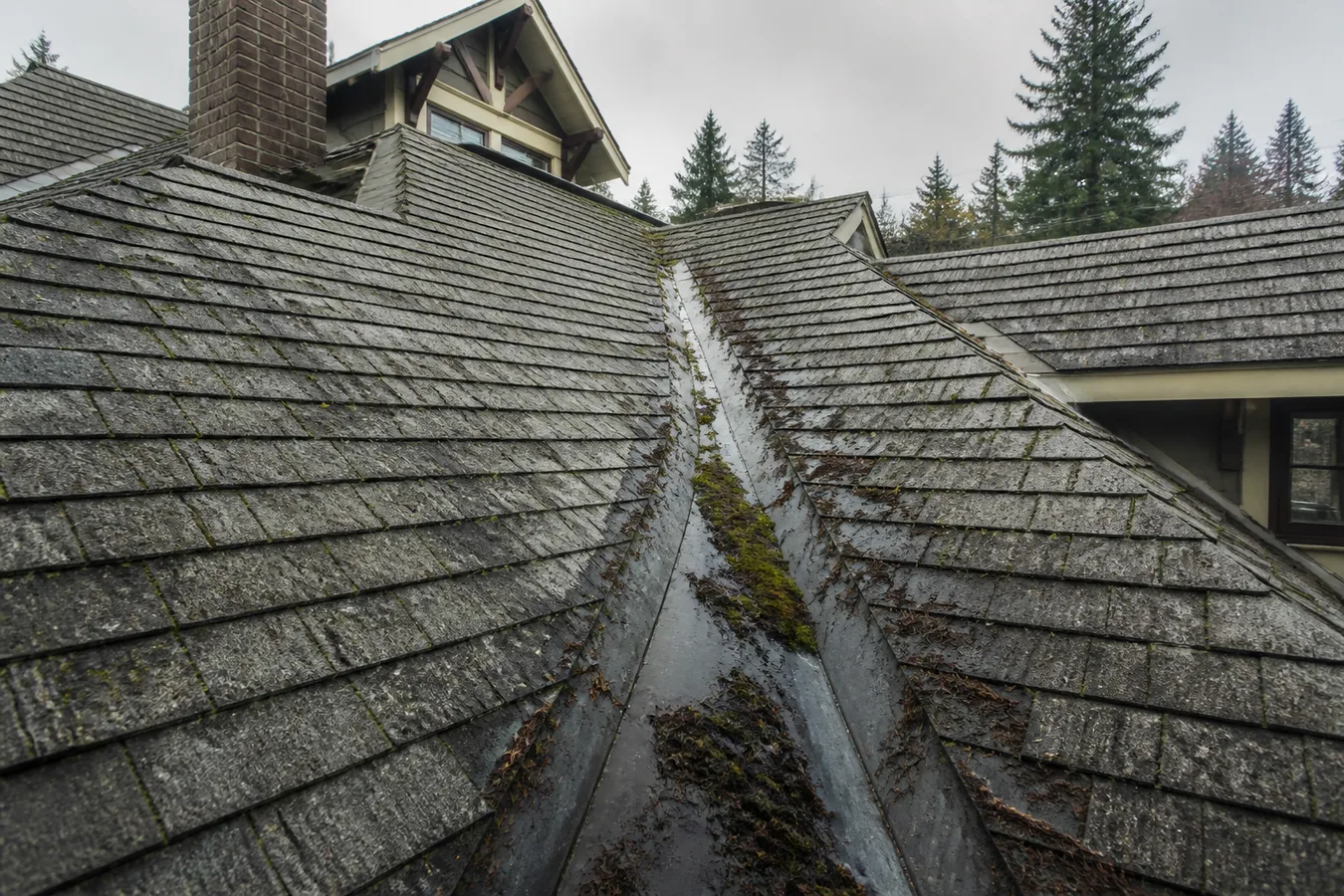
Valleys are the usual path.
Portland, Oregon
Valleys collect runoff from adjoining roof slopes, so small defects can handle a large volume of water. Debris, damaged material, failed underlayment, open seams, and poor repairs can create leaks along the valley path.
What to know
Leaves, needles, moss, and roofing debris can slow water and hold moisture. Safe clearing should avoid cutting, bending, or scouring the valley surface.
What to know
Open metal valleys, closed-cut shingle valleys, and woven details require different repair approaches. The scope must match the existing assembly and condition.
What to know
Valley leaks can travel along decking or framing. Inspect the uphill path, intersecting roof details, and adjacent materials before selecting a repair point.
When to call
Valley flashing maintenance matters because two roof planes dump water into one channel. Oregon debris, moss, and needle dams make valleys overflow under shingles.
Valleys are the usual path.
Dams raise water sideways into the covering.
Poor cuts and trapped debris wear the edge.
Valley metal has to remain a continuous chute.
Capacity and debris are often the issue.
Hidden valleys still fail and are harder to inspect.
Inspection focus
A useful valley flashing visit should look past the first stain and document the parts of the roof that move water in Oregon weather.
Scope factors
Valley flashing work ranges from cleaning to full metal replacement with surrounding covering. Tree cover and roof geometry drive how often valleys need attention in Oregon.
The repair detail has to match the original system.
Fir needles are a constant Willamette Valley issue.
Unequal slopes concentrate wear on one cut edge.
Valley metal cannot be replaced well if the field is too brittle to weave.
Continue the conversation
These nearby roofing services often belong in the same call. Review the matching page, then call to schedule service.
 01
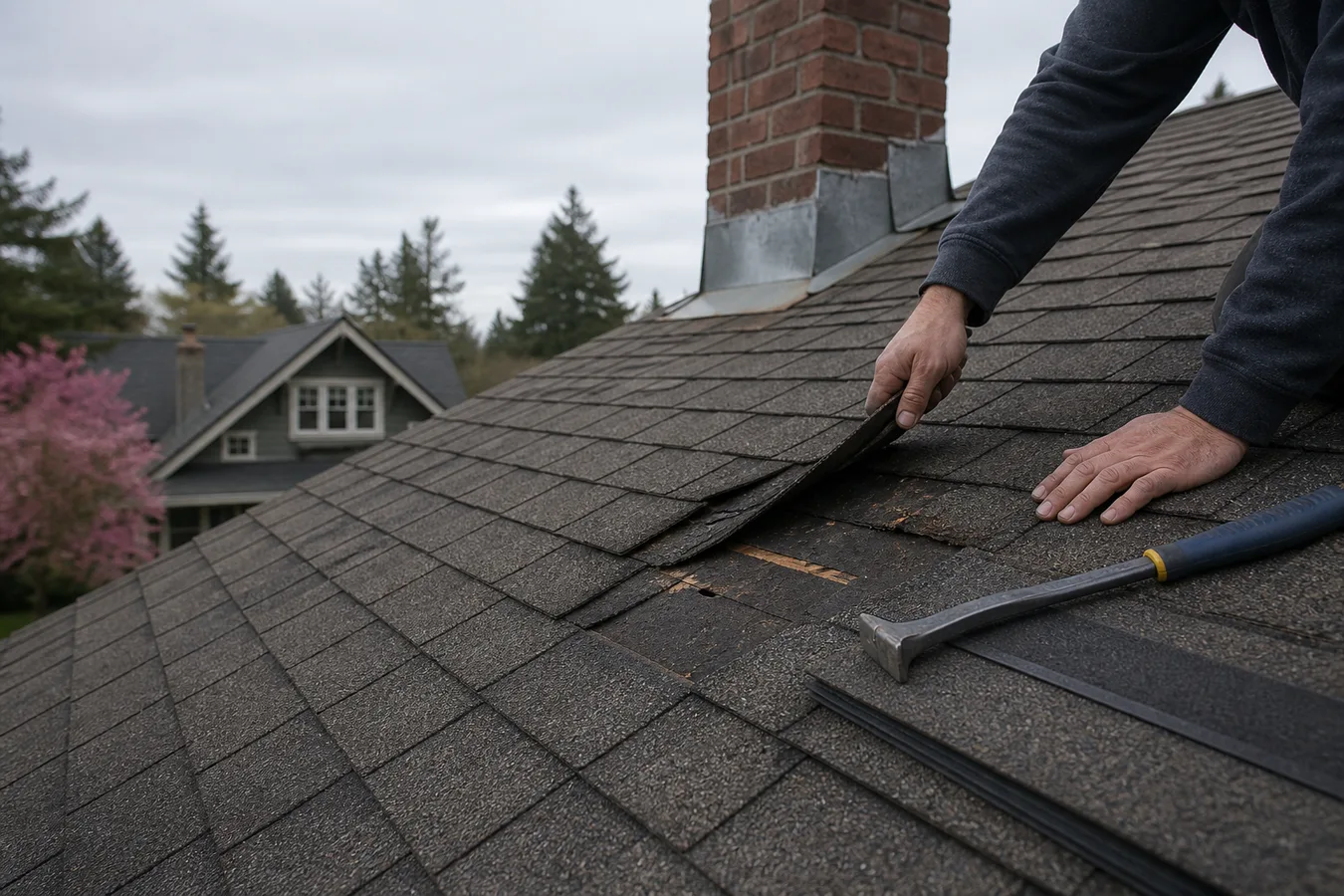
01Localized leak, flashing, shingle, and roof-edge repair support for Oregon properties.
Review this service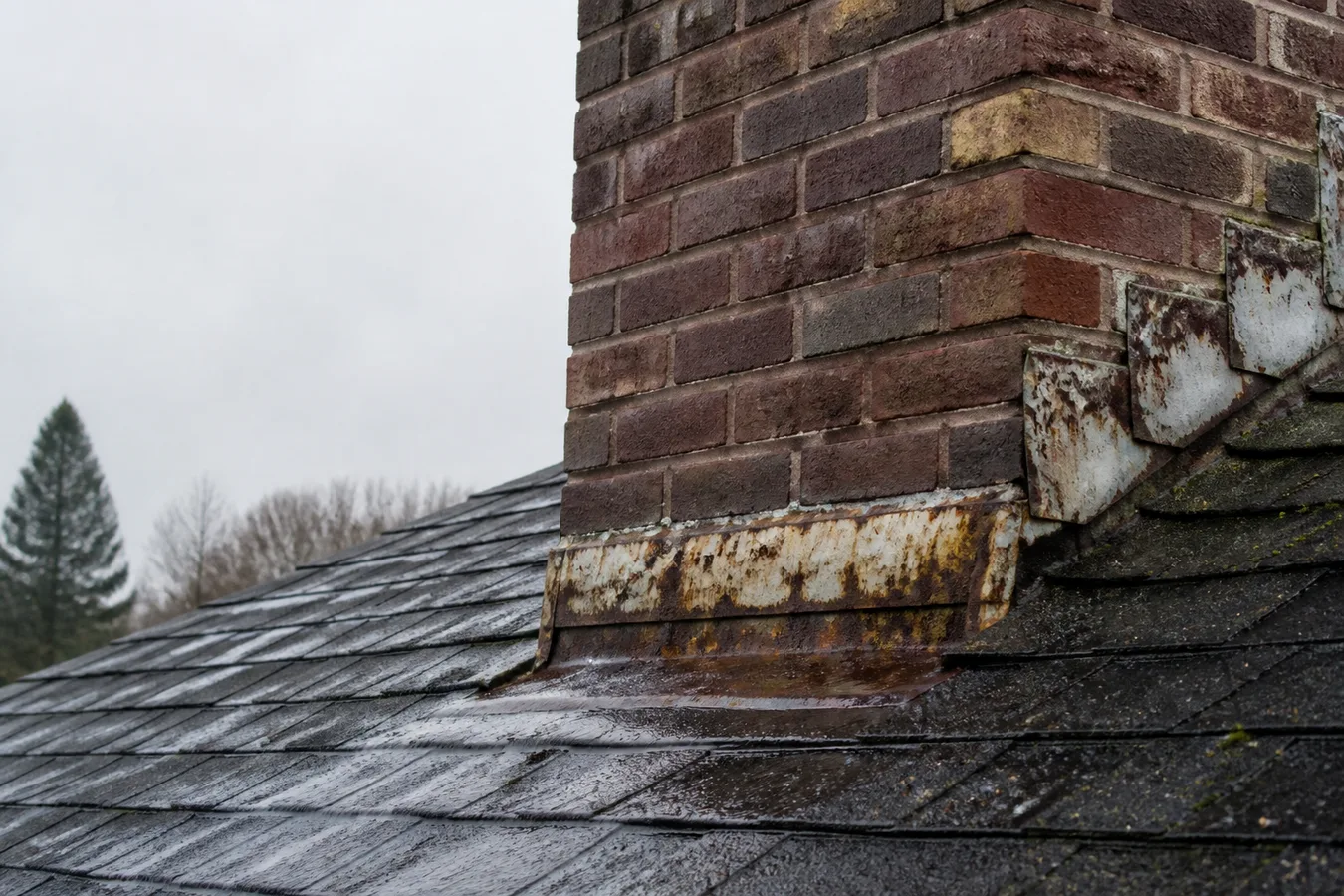 02
02Chimney step, counter, and cricket flashing where water often enters.
Review this service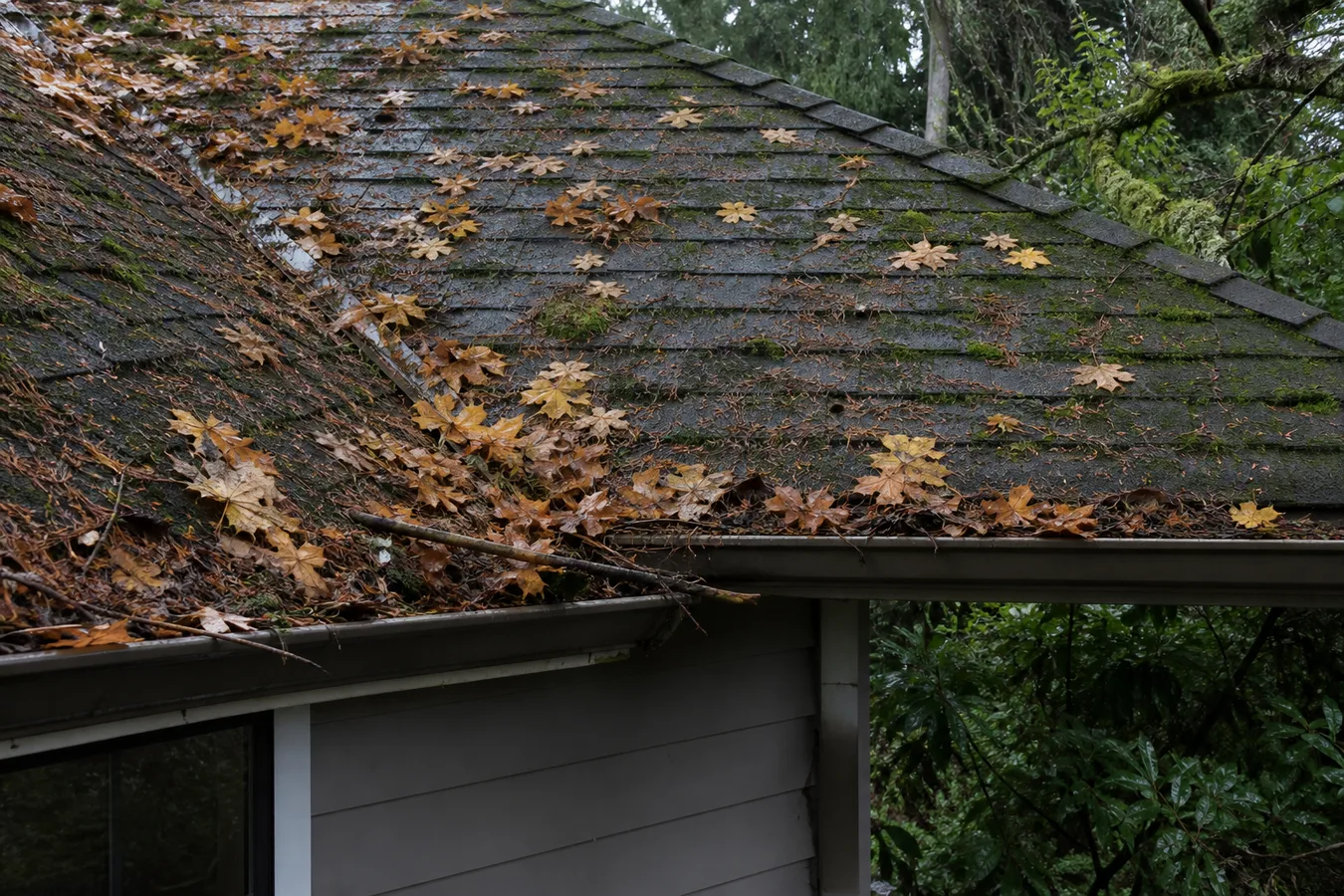 03
03Needles, leaves, and organic debris that hold moisture on roofs and in valleys.
Review this service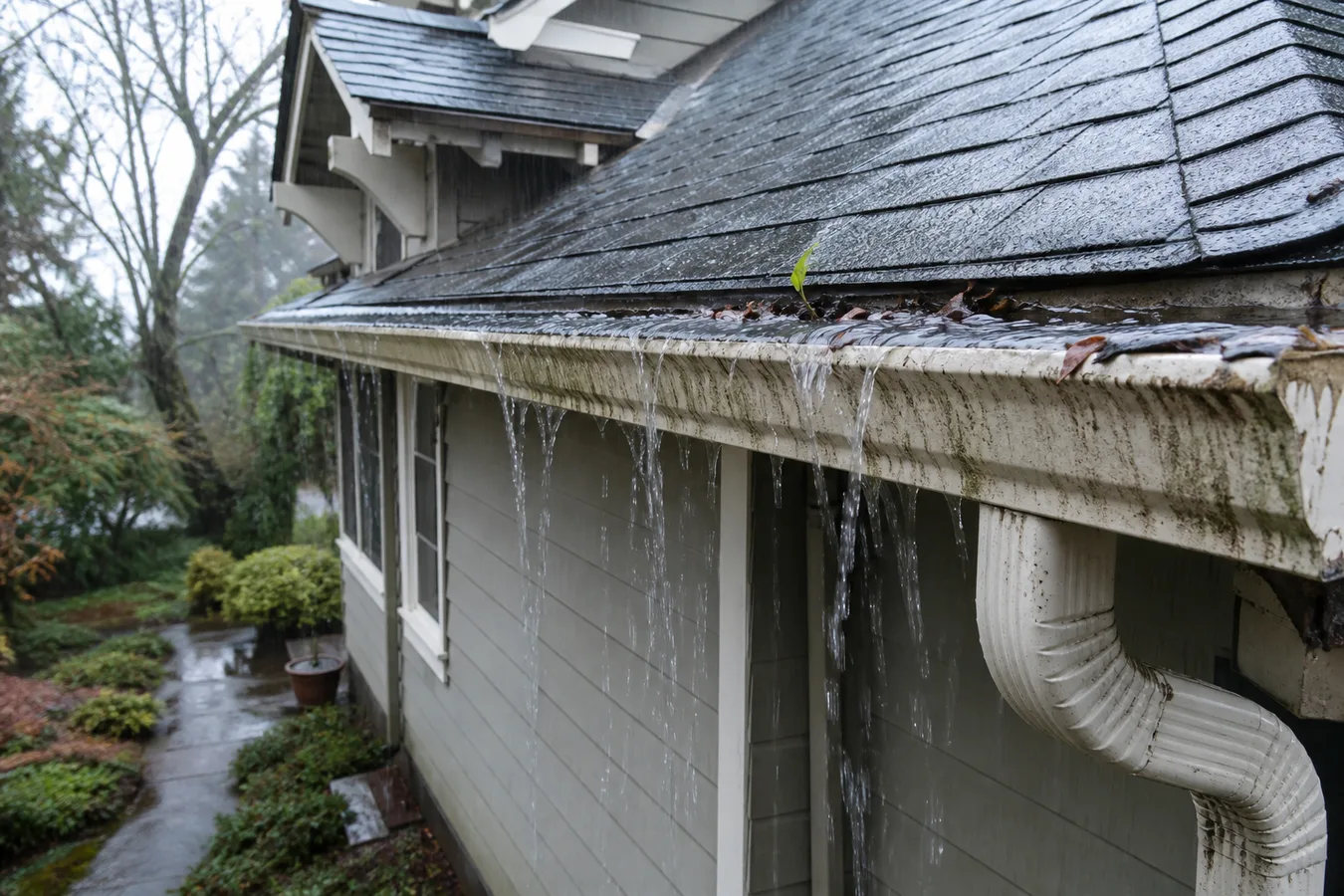 04
04Loose gutters, leaking joints, overflow, and roof-edge drainage problems.
Review this serviceCommon questions
Sometimes, but access may require removing surrounding roofing.
Call with the property location, visible symptoms, and whether water is actively entering.