
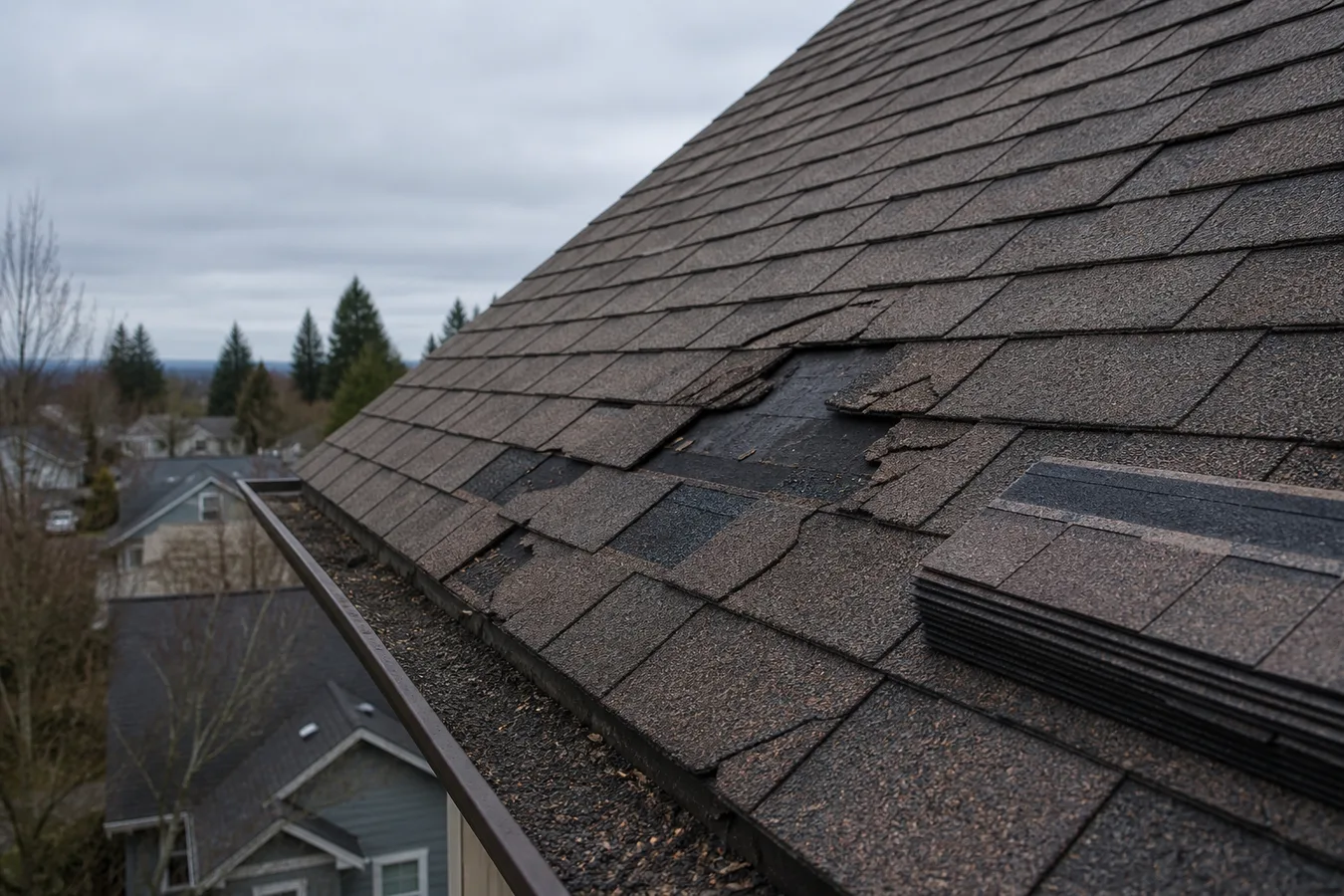
Signs You Need Asphalt Shingle Repair in Oregon
Curling, missing, or granule-losing shingles? Learn the seven signs Oregon homeowners should not ignore, plus repair costs. Call (503) 317-8312.
Read the articleRoofing guidance · Moss and maintenance
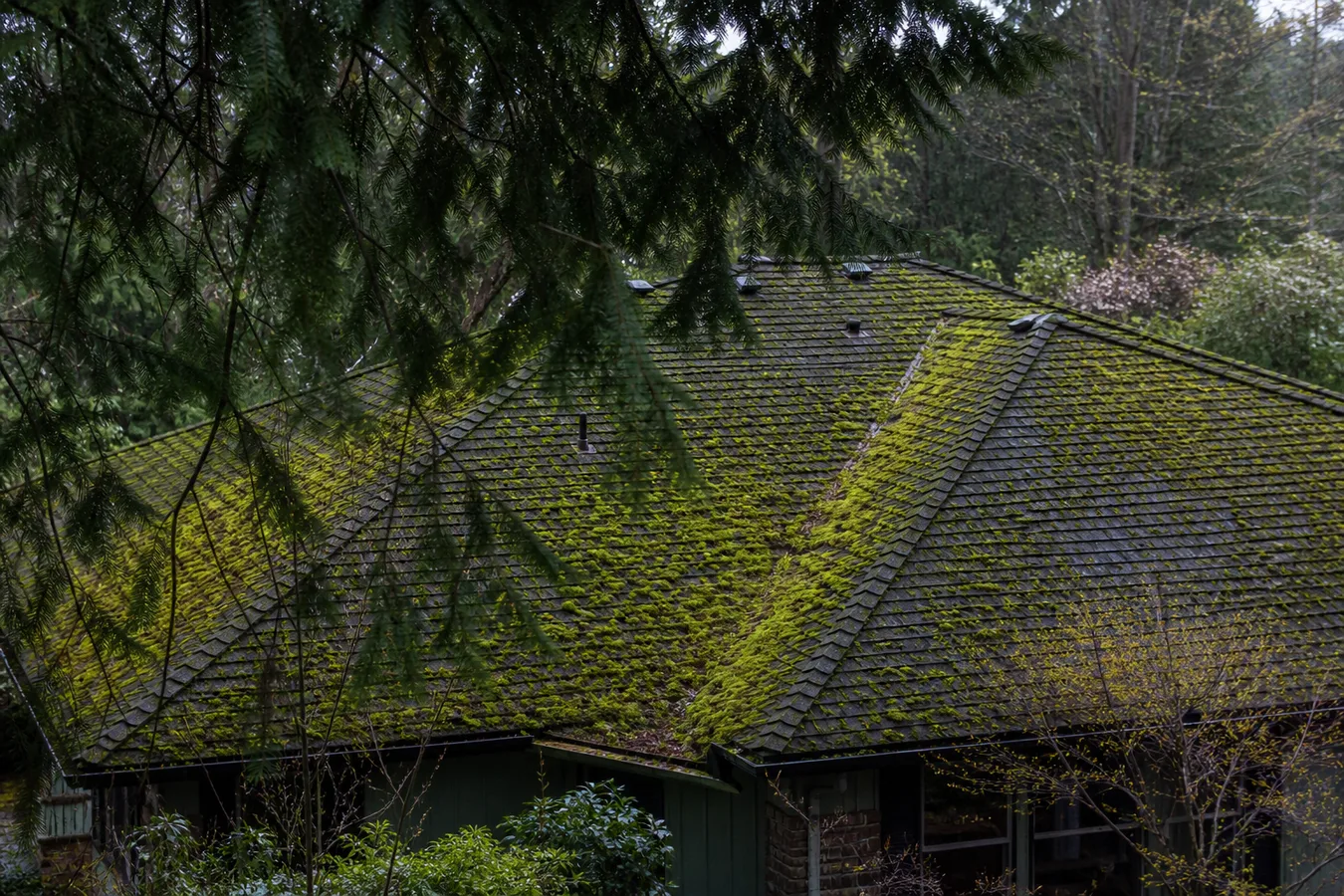
Moss is the most visible roof problem in Oregon, and the most misunderstood. The moss itself is not the leak. The damage is what it does while it sits there: it lifts the shingle tabs, holds moisture against the surface, and gives roots something to work into. The right response is roof-safe removal and prevention, not a pressure washer. This guide covers why moss forms, what removal costs, and how to keep it from coming back.
Oregon's shaded, wet climate is a moss nursery. North-facing slopes, roofs under fir and maple canopies, and homes near the coast or the Willamette Valley all stay damp for months. Algae appears as dark streaks. Moss appears as green growth that lifts the edges of the shingles. Both hold water against the roof surface long after the rain stops.
Moss does not eat the shingle, but it does three destructive things. It lifts the shingle tabs so wind and rain can get under them. It holds moisture against the asphalt, which accelerates aging and granule loss. And it traps debris, leaves, and dirt in the root mat, which keeps the surface wet and feeds more growth.
Professional roof-safe moss removal in Oregon, including tree-covered Gresham neighborhoods, typically costs $250 to $600 for a single-story home and $600 to $1,200 for larger or steeper roofs. The price covers the treatment, the rinse, and gutter cleanup, and it should not include pressure washing. Pressure washing strips granules, forces water under the shingles, and can void the manufacturer's warranty. The cheapest bid is usually the one that damages the roof.
Removal without prevention means the moss returns in a season. The lasting approach combines cleaning with the conditions that dry the roof out.
Moss hides what is underneath it. A heavy moss mat can cover curling shingles, cracks, and lifted edges that are already letting water in. When the moss comes off, the surface should be reviewed. If the shingles underneath are cracked, brittle, or missing granules, the conversation moves from cleaning to asphalt shingle repair. That is why moss removal with Roof Repairs Pro should include a condition check.
Common questions
Professional roof-safe moss removal typically costs $250 to $600 for a single-story home and $600 to $1,200 for larger or steeper roofs, including treatment, rinse, and gutter cleanup.
No. Pressure washing strips the granules, forces water under the shingles, and can void the manufacturer's warranty. Roof-safe chemical treatment with a gentle rinse is the correct method.
Once a year on shaded slopes, with a fall treatment before the wettest months. Homes under heavy tree cover may need a spring follow-up.
Moss does not cause a hole directly, but it lifts shingle edges, holds moisture against the surface, and traps debris, all of which create conditions where leaks start.
No single treatment is permanent. The lasting approach combines annual treatment, ventilation, branch trimming, and clean gutters so the roof dries between storms.
Keep reading
Curling, missing, or granule-losing shingles? Learn the seven signs Oregon homeowners should not ignore, plus repair costs. Call (503) 317-8312.
Read the article
Portland roof leak repair often runs $350 to $1,500 when the source is localized. See what changes the bid, then call (503) 317-8312.
Read the article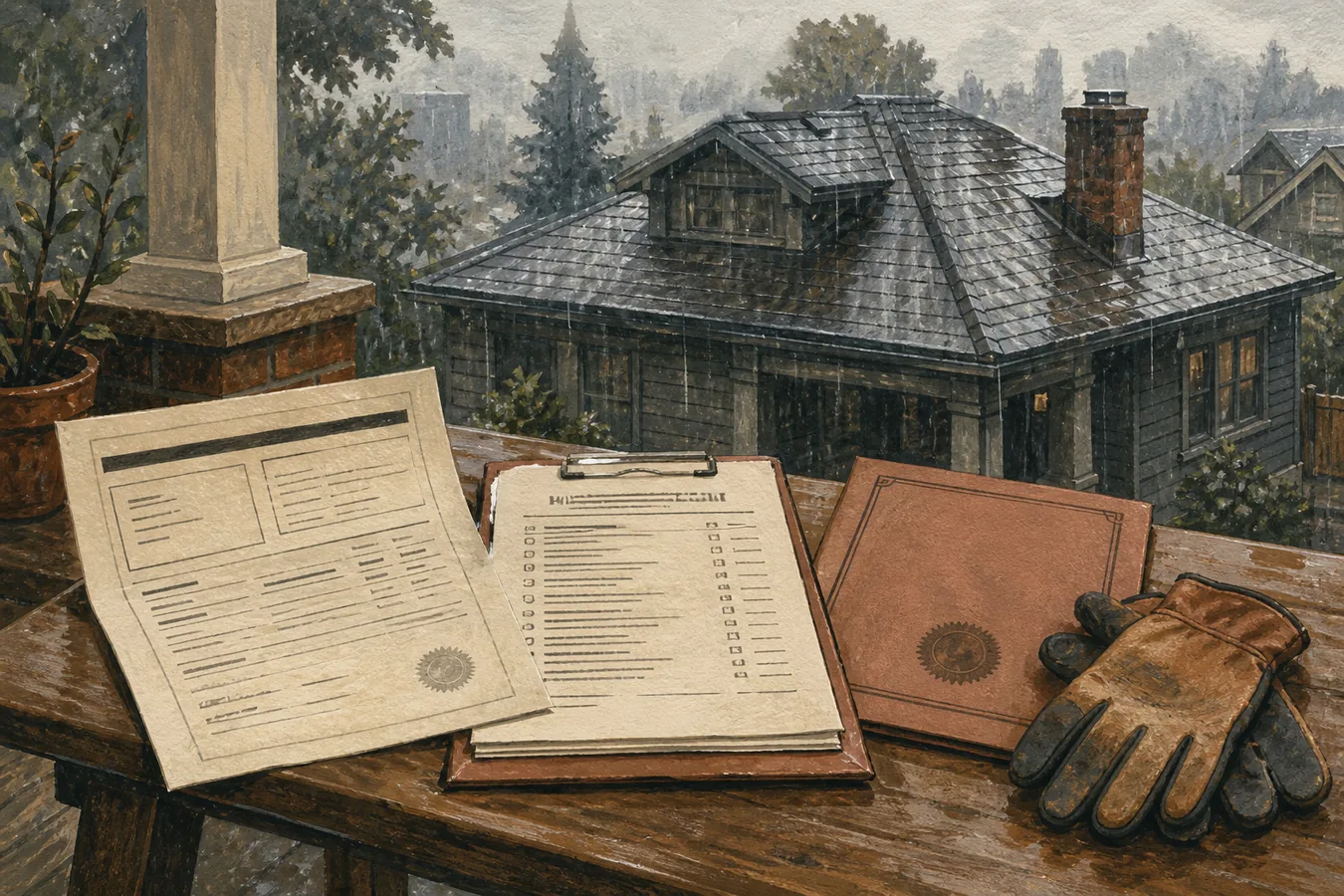
Oregon roofers need an active CCB license, bond, and insurance. Verify the number, get a written scope, then call (503) 317-8312.
Read the articleAfter reading
Guidance helps you recognize a problem. A phone call is the next step when water is entering, materials are missing, or a sale or storm created a deadline.
Contain the drip if it is safe and call with the address.
Wind and impact openings should be reviewed before the next rain.
Moisture is still moving through the roof assembly.
Inspection or certification scheduling is confirmed when you call.
Related pages
Use the matching service page, the local area page, or the related article, then call Roof Repairs Pro.
Describe the property location, visible symptoms, and whether water is entering now.