
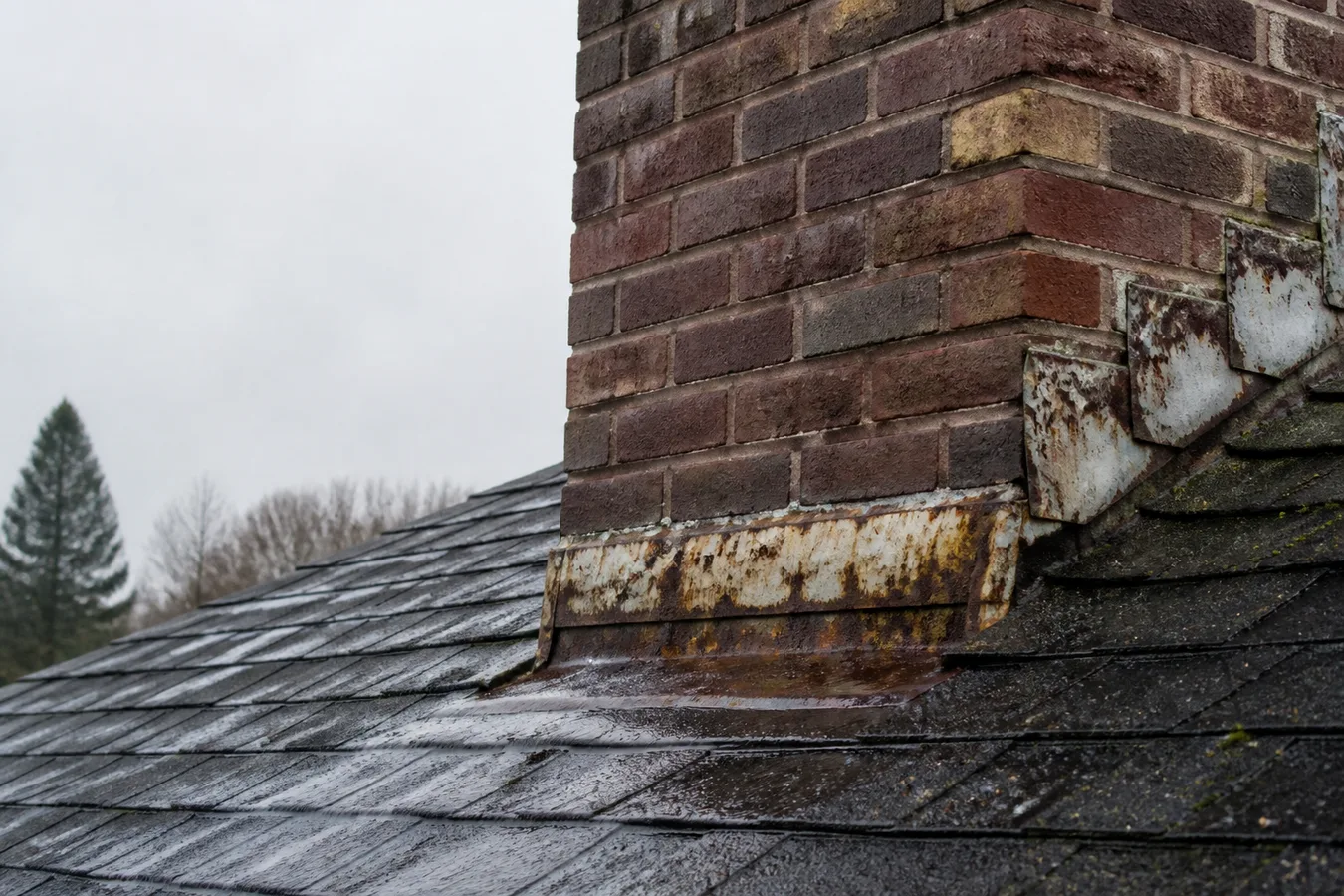
Roof Flashing Problems in Oregon: Signs and Repair
Most Oregon roof leaks start at the flashing. Learn the warning signs, repair costs, and when to call (503) 317-8312.
Read the articleRoofing guidance · Leaks and water damage
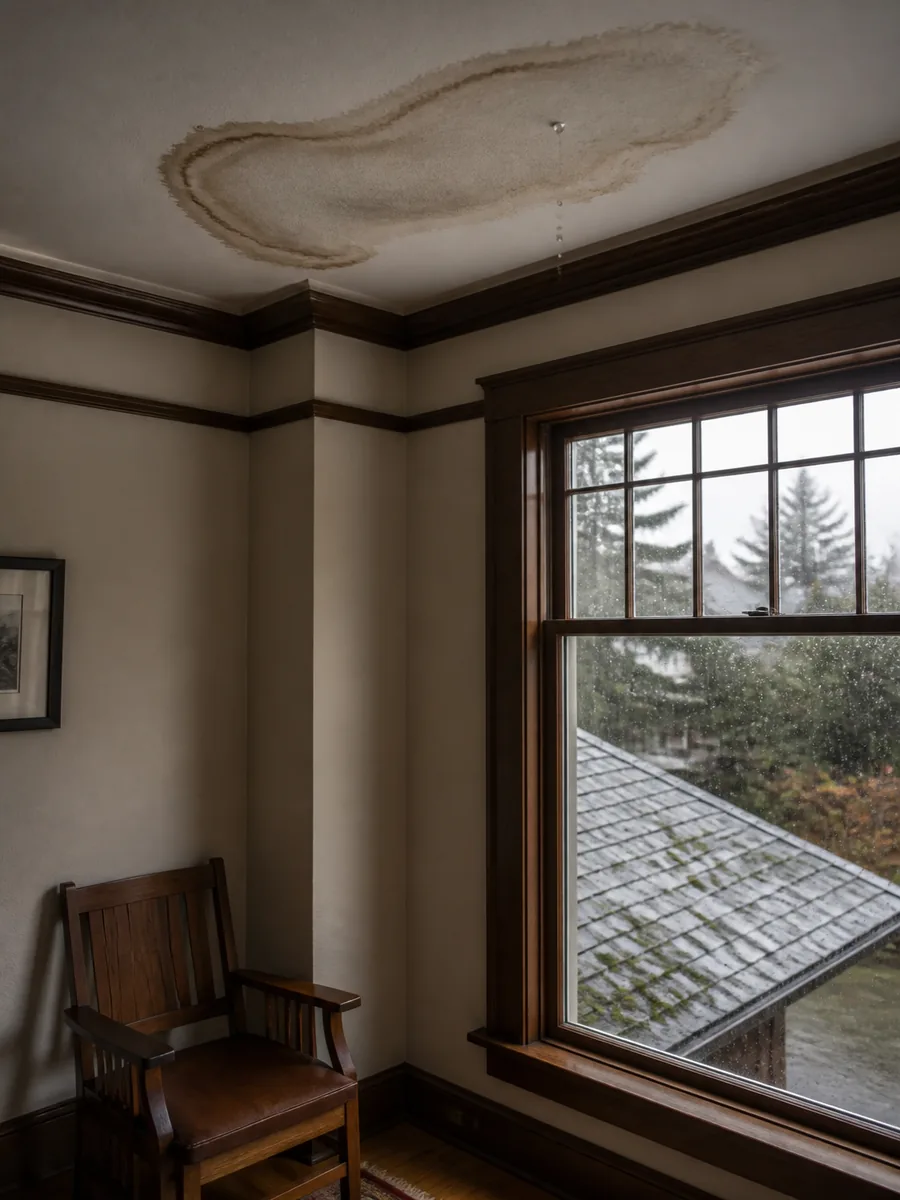
Rain moves sideways in Oregon, and a leak in Portland, Salem, or Eugene can travel several feet along decking before a single drop shows on a ceiling. By the time most homeowners see a stain, the roof has been admitting water for weeks. This guide covers the warning signs to look for, the places leaks start most often, and the repair cost range so you know when a phone call is the right next step.
Work from the interior outward. A stain on the ceiling is the last thing water does. Earlier signs are usually visible in the attic, on the roof surface, and around the home's exterior.
Most leaks in the Pacific Northwest start at a penetration, not in the middle of a clean shingle field. Water runs downhill until it finds a gap, so the highest point of the problem is usually not where the stain appears.
Go into the attic only when the floor is sound and you have a safe path. During or just after rain, look for water droplets, wet insulation, and dark lines on the underside of the decking. Mark the spot with a nail or string so you can find it again from the roof. Never stand on insulation, ceiling joists are not always where they appear, and wet decking can be slick.
A small, localized roof leak repair in Oregon typically runs between $300 and $900, depending on access, the material, and the source. Repairs involving flashing replacement, a skylight curb, or several damaged shingles more often fall in the $800 to $2,000 range. Emergency response, steep roof access, or interior water damage pushes the total higher. The Portland-specific ranges are in roof leak repair cost in Portland. The only way to get an accurate number for a specific Portland, Salem, or Eugene property is to describe the location and visible symptoms during a call to Roof Repairs Pro, because the leak path, not the stain, determines the scope.
Call the same day when water is actively entering, when a ceiling is sagging or bubbling, when wind has opened a section of roof, or when a storm is forecast and materials are already missing. Every one of those situations is exactly what the emergency roof leak repair process is for.
A proper leak repair does not begin on the roof. It begins with the address, the visible symptom, the roof material, and the recent weather, because the path water takes tells a contractor where to look first.
Covering a stain with paint does nothing. Replacing a single shingle above the stain is better but still misses the point when the water is entering through a failed vent boot 8 feet away. That is why roof leak repair done properly includes tracing the water path and fixing the entry point, then confirming the roof sheds water again.
Common questions
Start in the attic during or just after rain, look for the highest wet spot or water trail, and work upward toward the entry point. The stain on the ceiling is rarely directly under the leak.
Localized leak repairs typically cost $300 to $900. Flashing, skylight, or multi-point repairs usually run $800 to $2,000 before emergency or access surcharges.
A slow stain can sometimes wait days, but any active drip, sagging ceiling, or forecast storm makes it urgent. Water that reaches decking, insulation, or drywall multiplies the repair cost.
Wind-driven rain pushes water under flashing and shingles that look fine in dry weather. That pattern usually points to a penetration or roof edge rather than the middle of a slope.
Only if the leak is in the covering or decking. Leaks at flashing, vents, and valleys can survive a replacement, which is why an inspection should trace the source before the roof is replaced.
Keep reading
Most Oregon roof leaks start at the flashing. Learn the warning signs, repair costs, and when to call (503) 317-8312.
Read the article
Portland roof leak repair often runs $350 to $1,500 when the source is localized. See what changes the bid, then call (503) 317-8312.
Read the article
Oregon emergency roof leak repair typically runs $500 to $2,500. See what after-hours work includes, then call (503) 317-8312.
Read the articleAfter reading
Guidance helps you recognize a problem. A phone call is the next step when water is entering, materials are missing, or a sale or storm created a deadline.
Contain the drip if it is safe and call with the address.
Wind and impact openings should be reviewed before the next rain.
Moisture is still moving through the roof assembly.
Inspection or certification scheduling is confirmed when you call.
Related pages
Use the matching service page, the local area page, or the related article, then call Roof Repairs Pro.
Describe the property location, visible symptoms, and whether water is entering now.