
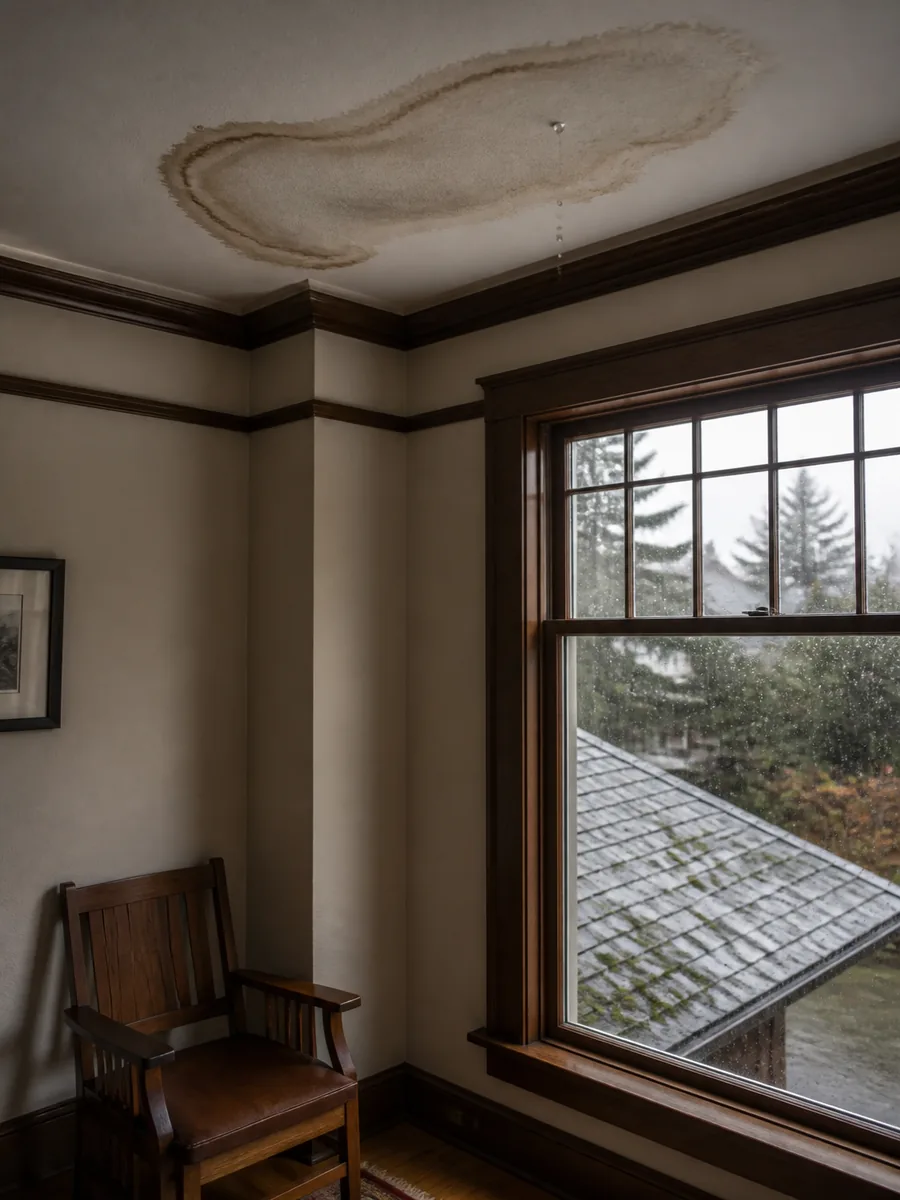
How to Spot Roof Leaks in Portland, Salem, and Eugene
Roof leak signs every Oregon homeowner should know. Learn where leaks start, what they cost to repair, and when to call (503) 317-8312.
Read the articleRoofing guidance · Flashing
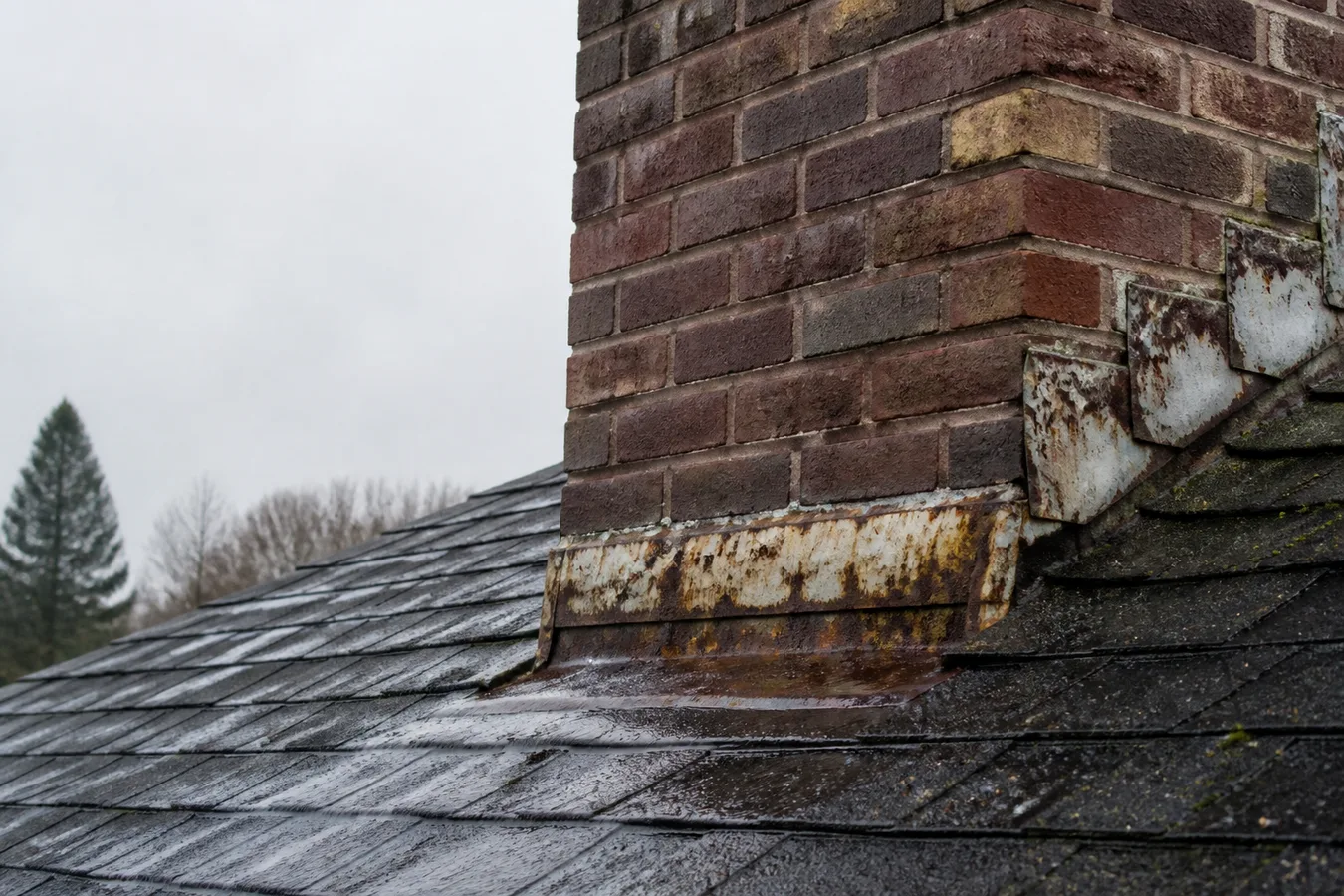
Most Oregon roof leaks do not start in the middle of a clean shingle field. They start at the flashing: the metal that seals the chimney, the walls, the skylights, the vents, and the valleys. Flashing is a small part of the roof that takes the worst of the weather, and when it fails, water enters in places that are hard to trace. This guide covers why flashing fails in Oregon, the signs to watch for, and what the repairs cost.
Flashing works in a climate of constant moisture, freeze-thaw, and thermal movement. In Portland and the Willamette Valley, flashing stays wet for months. In Central Oregon, it expands and contracts with temperature swings that work the metal and the sealants. Moss holds moisture against the base of the flashing. The result is the same across the state: the metal corrodes, the sealant fails, and water finds the gap.
Chimney flashing fails at the base where it meets the masonry, often because the sealant or counter-flashing opened. Step flashing along sidewalls fails when the flashing is missing, short, or not layered into the siding. Valley flashing fails when debris and moss build up in the open valley and water moves under the metal. Each location has a specific repair, and each shows as an interior stain well below the actual entry.
Flashing repair in Oregon, including Lake Oswego and other Willamette Valley homes, typically costs $300 to $900 for a single area such as a chimney base or a vent boot. Skylight flashing, valley repairs, or multiple penetrations usually run $800 to $2,500. Full flashing replacement on an older roof adds to the scope. Chimney-specific Portland numbers are in chimney flashing repair cost in Portland. The cost depends on access, the flashing type, and whether the surrounding shingles or siding need to be removed and reinstalled around the repair.
Flashing repairs fail when the wrong metal is used or the layers are installed in the wrong order. Water sheds over the flashing only when each layer overlaps correctly and sheds onto the layer below. A flashing repair that looks sealed but is layered wrong will leak again in the next wind-driven rain. That leak path is the same one covered in how to spot roof leaks in Portland, Salem, and Eugene. That is why the repair should be part of a roof system conversation with Roof Repairs Pro, not a tube of sealant.
Common questions
Flashing repair typically costs $300 to $900 for a single area such as a chimney or vent. Skylights, valleys, or multiple locations usually run $800 to $2,500.
Sealant is a temporary stop, not a flashing repair. Water will re-enter when the sealant fails, and the wrong product can trap moisture behind the metal. The correct fix replaces or re-lays the flashing.
Galvanized steel flashing can last 20 to 40 years depending on the environment. Constant moisture, moss, and freeze-thaw shorten that life, so the flashing is often the first part of an older roof to fail.
Wind-driven rain moves up and over the flashing base where the sealant or counter-flashing has failed. The leak shows during the hardest rain because that is when the water is pushed over the failing layer.
A new roof is an opportunity to replace aged flashing, but flashing that is sound can be reused or repaired during the replacement. The inspection determines which flashing needs to be replaced.
Keep reading
Roof leak signs every Oregon homeowner should know. Learn where leaks start, what they cost to repair, and when to call (503) 317-8312.
Read the article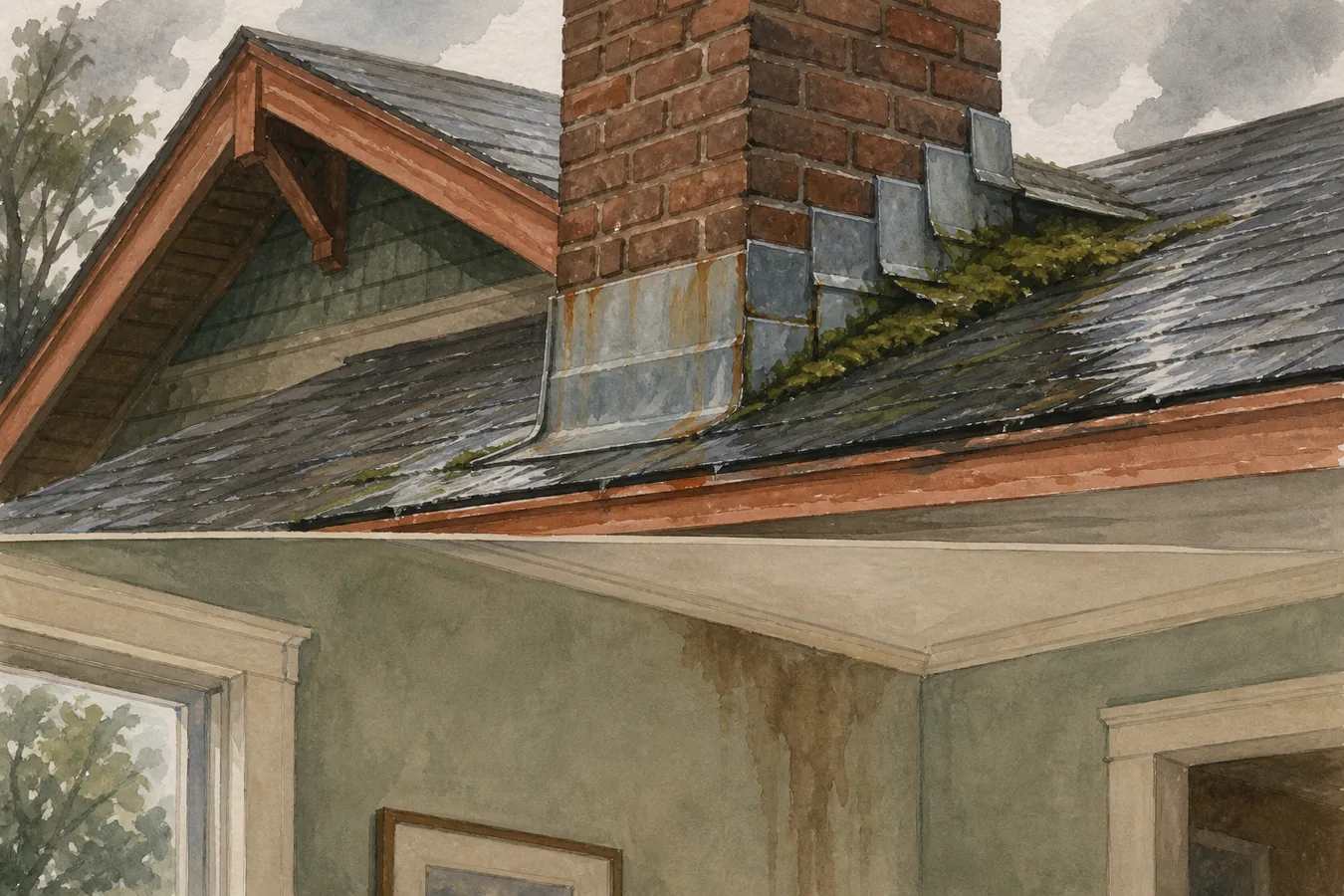
Portland chimney flashing repair often costs $300 to $900 for one area, more for a full rebuild. See why caulk fails. Call (503) 317-8312.
Read the article
Portland roof leak repair often runs $350 to $1,500 when the source is localized. See what changes the bid, then call (503) 317-8312.
Read the articleAfter reading
Guidance helps you recognize a problem. A phone call is the next step when water is entering, materials are missing, or a sale or storm created a deadline.
Contain the drip if it is safe and call with the address.
Wind and impact openings should be reviewed before the next rain.
Moisture is still moving through the roof assembly.
Inspection or certification scheduling is confirmed when you call.
Related pages
Use the matching service page, the local area page, or the related article, then call Roof Repairs Pro.
Describe the property location, visible symptoms, and whether water is entering now.