
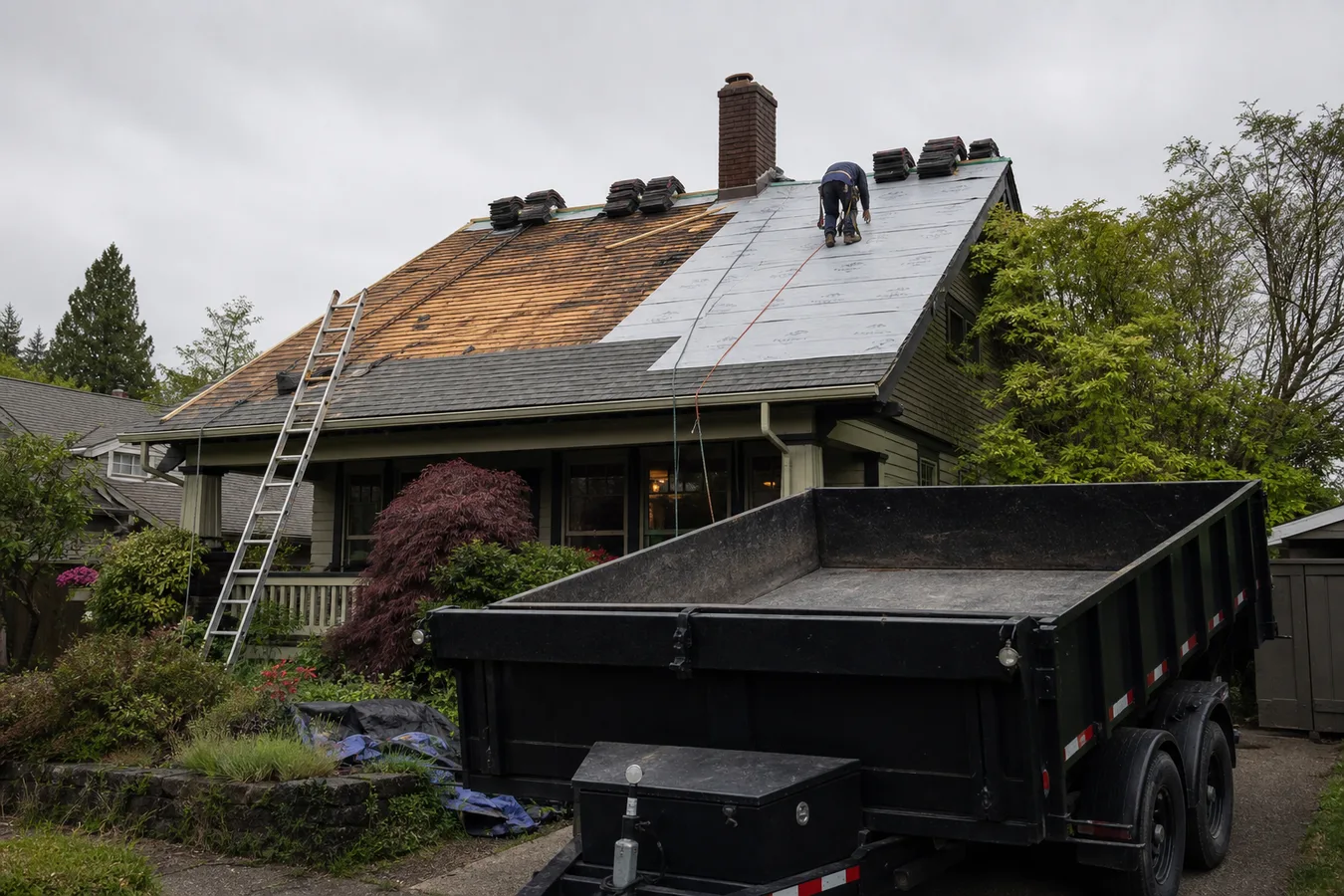
Choosing Roof Replacement Services in Oregon
Replacing a roof in Oregon? Compare costs, timelines, materials, and contractor questions before you commit. Call (503) 317-8312.
Read the articleRoofing guidance · Inspection
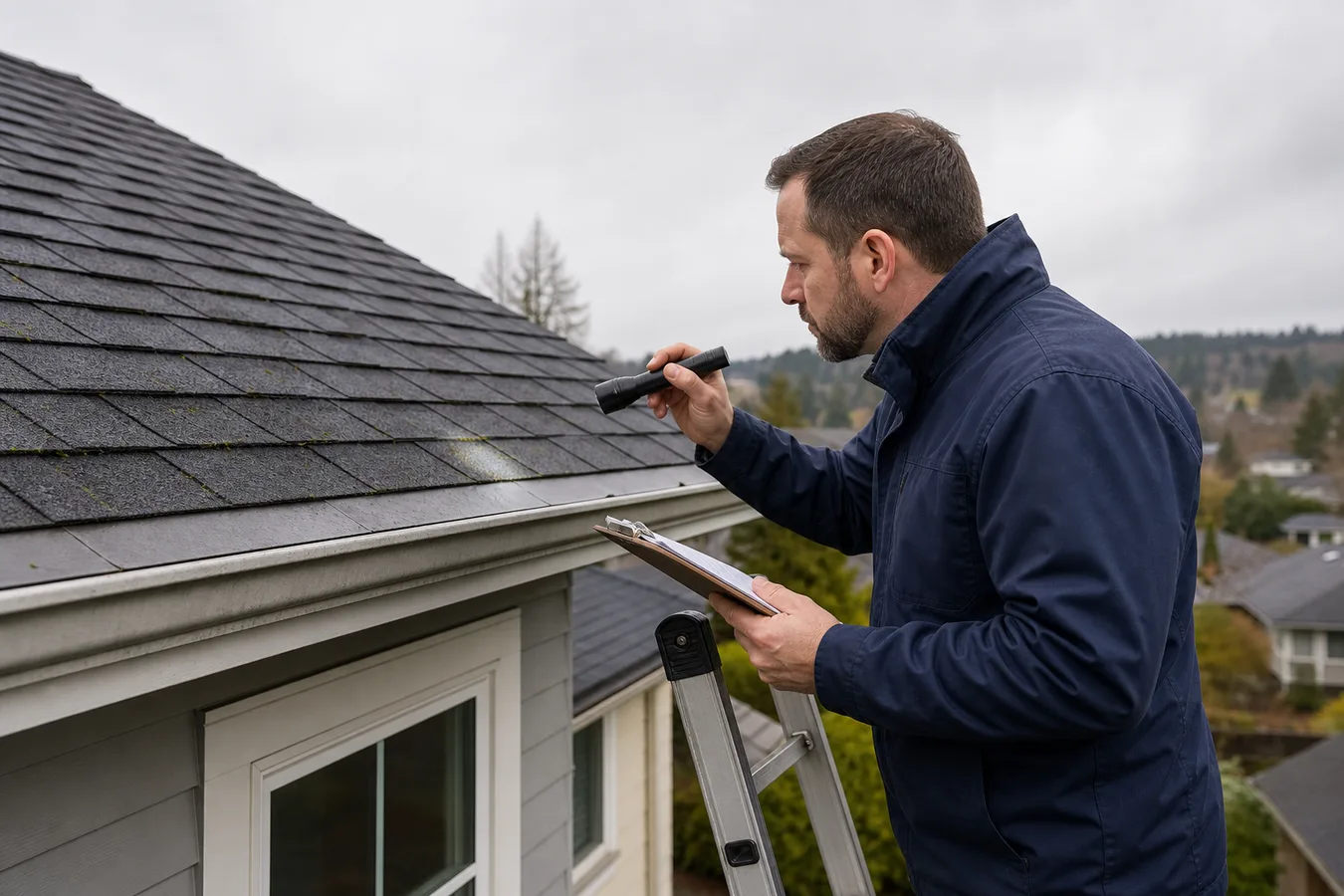
Oregon weather tests every part of a roof at once: long rain, shade, moss, wind, and freeze-thaw. A roof inspection is the tool that catches the damage before it reaches the ceiling. This guide explains what a professional inspection checks, what it costs, and the five situations where it pays for itself.
The Pacific Northwest does not damage roofs dramatically. It damages them slowly and constantly. Moisture sits on shaded slopes, moss lifts the shingle edges, and wind-driven rain finds flashing that loosened months ago. By the time a stain appears, the damage has been developing for weeks. An inspection every year or two finds the early signs while they are still a repair instead of a replacement.
A useful inspection covers the whole roof system, not just the surface. The review should include the covering, the flashing, the drainage, the edges, and the attic clues.
A surface look from the ground is not an inspection. A professional inspection documents the condition of the roof system and explains what is serviceable, what needs attention, and what could fail next. That documentation is what a repair estimate, an insurance claim, or a real estate transaction needs.
A standard residential roof inspection in Oregon typically costs $150 to $400, with larger or steeper homes at the higher end. Inspections tied to a repair or replacement quote are often included in the proposal. A roof certification for a real estate sale or refinance is a documented review that usually falls in the same range, and it gives the transaction a written condition statement. The difference between those documents is in roof certification for Oregon home sales.
For buyers, an inspection answers three questions: how much life is left, what needs repair now, and what will fail in the first few years. For sellers, a documented inspection is a disclosure tool that prevents surprises at the inspection contingency. A roof certification can move a sale forward when the roof is older but serviceable.
The inspection ends with a condition summary. Localized problems become a repair conversation. Widespread wear becomes a roof replacement conversation. Either way, the documentation from Roof Repairs Pro explains the scope and the timeline, which makes the next call more productive.
Common questions
A residential roof inspection typically costs $150 to $400. When the inspection is part of a repair or replacement quote, the cost is usually included.
Every one to two years for routine care, plus after major storms. Homes under heavy tree cover or with moss problems benefit from the annual schedule.
You can check visible signs from the ground and look for interior clues in the attic, but a professional inspection covers flashing, valleys, edges, and drainage that are hard to assess safely and accurately from below.
It will document the condition, the remaining life, and the leak risks. The repair-versus-replacement decision follows from that condition report.
Yes. A documented inspection supports storm damage claims, helps distinguish sudden damage from wear, and gives the adjuster a clear condition report.
Keep reading
Replacing a roof in Oregon? Compare costs, timelines, materials, and contractor questions before you commit. Call (503) 317-8312.
Read the article
Oregon does not require a roof certification to sell. Lenders and buyers often do. See cost, timing, and what fails. Call (503) 317-8312.
Read the article
Portland roof leak repair often runs $350 to $1,500 when the source is localized. See what changes the bid, then call (503) 317-8312.
Read the articleAfter reading
Guidance helps you recognize a problem. A phone call is the next step when water is entering, materials are missing, or a sale or storm created a deadline.
Contain the drip if it is safe and call with the address.
Wind and impact openings should be reviewed before the next rain.
Moisture is still moving through the roof assembly.
Inspection or certification scheduling is confirmed when you call.
Related pages
Use the matching service page, the local area page, or the related article, then call Roof Repairs Pro.
Describe the property location, visible symptoms, and whether water is entering now.